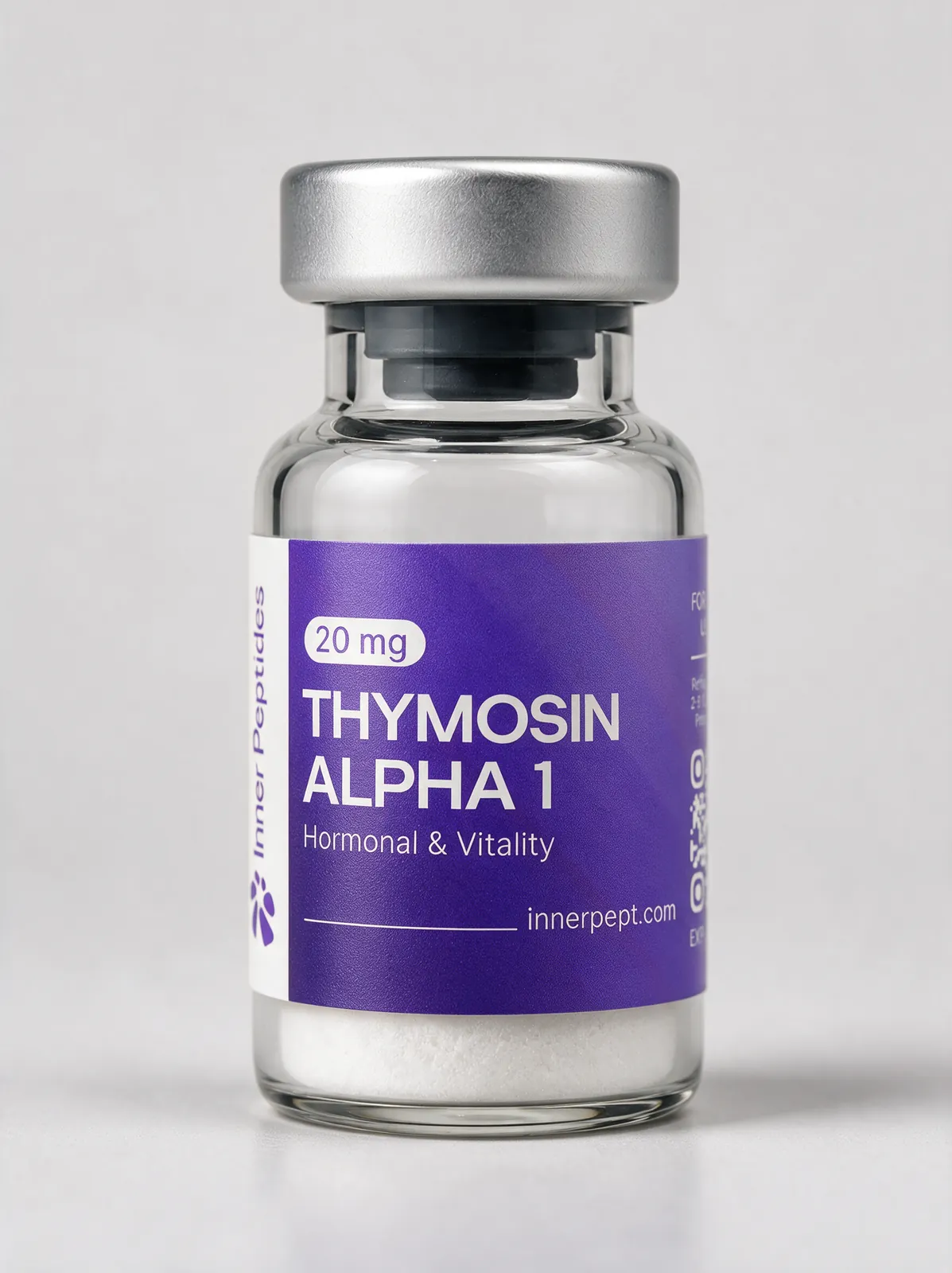

Ipamorelin + CJC-1295 (no DAC)
Two peptides in one formula, focused on your growth hormone.
Vial content, not a dose.
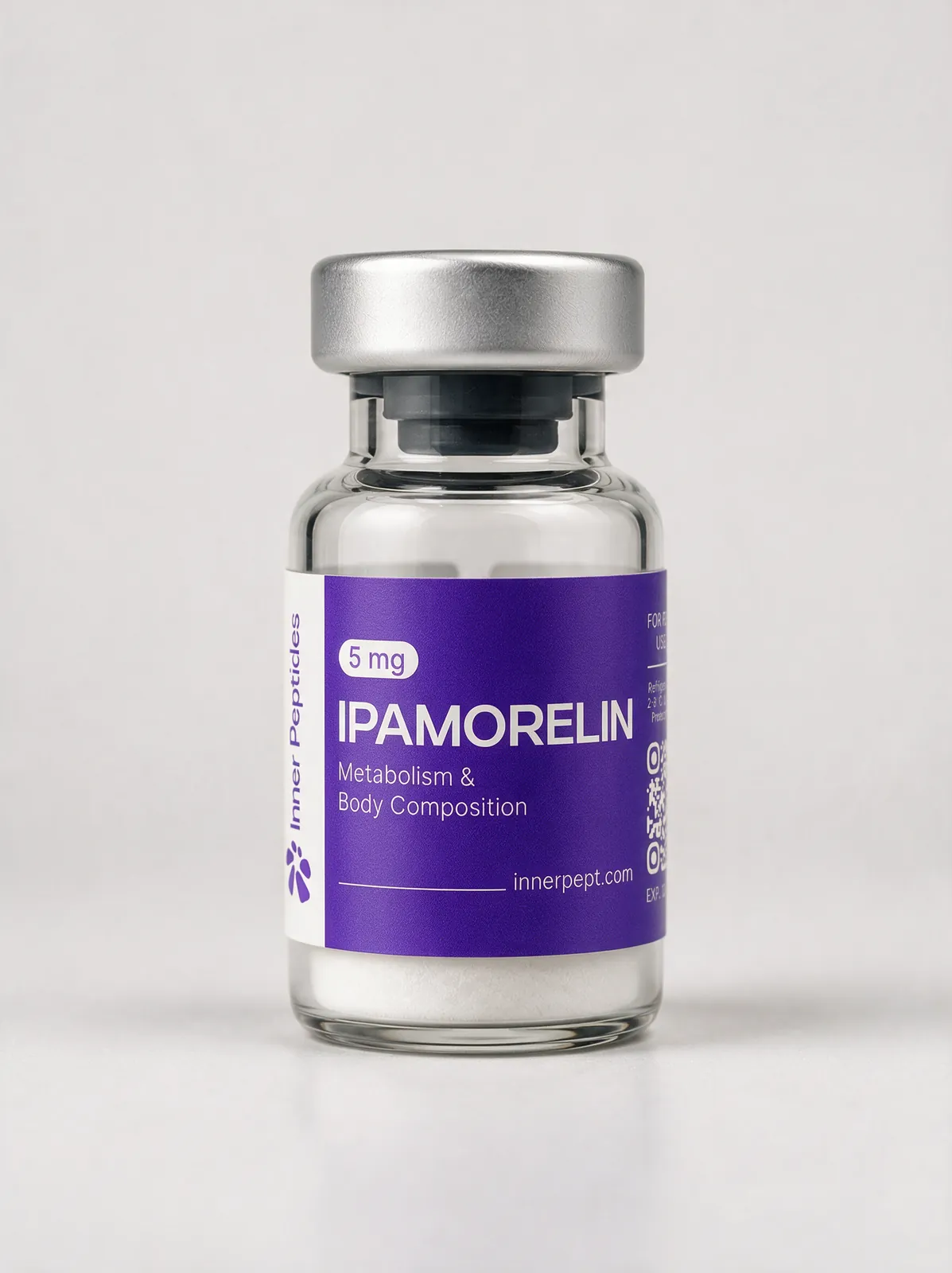
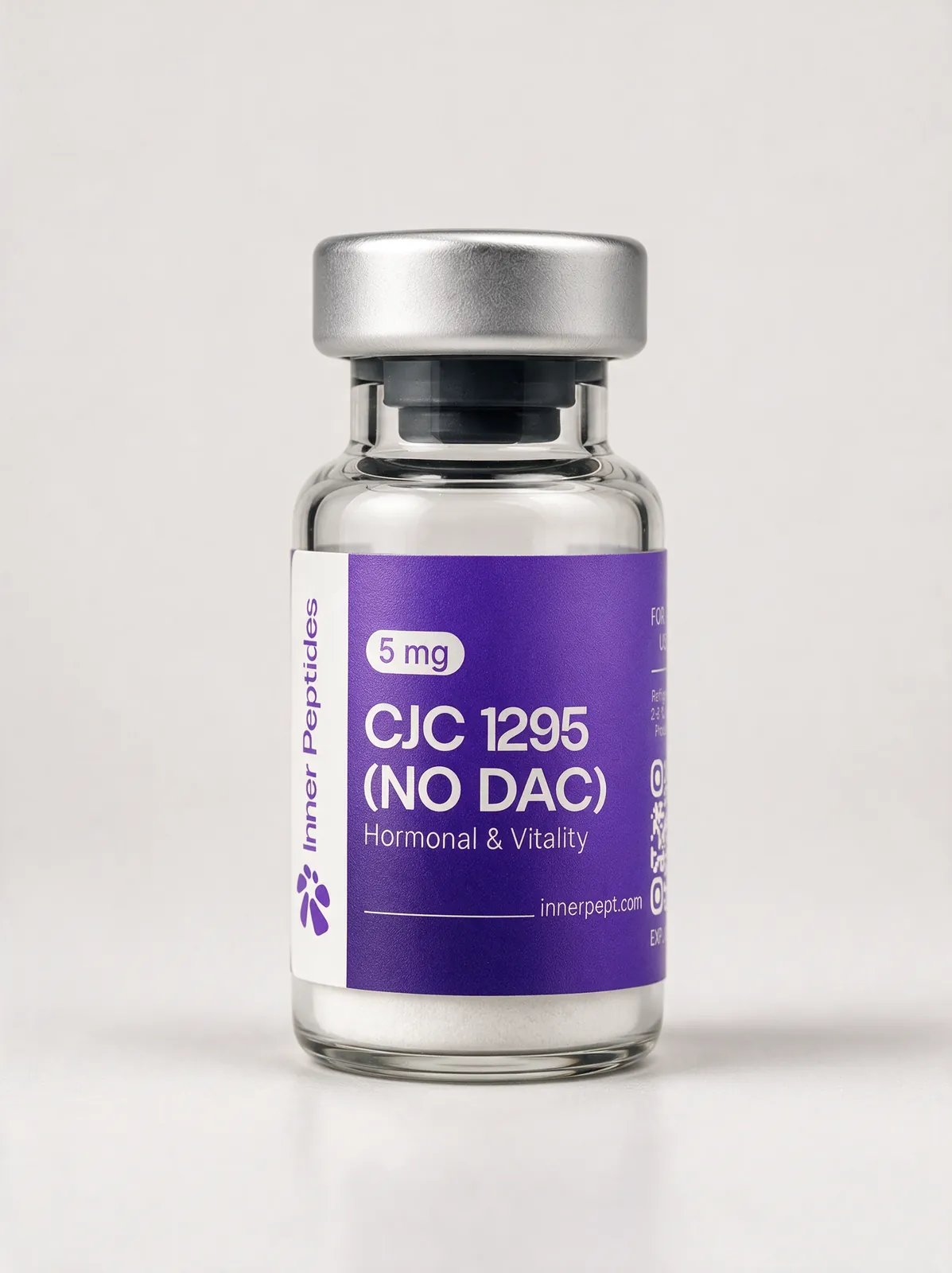
Ipamorelin and CJC-1295 are two different peptides that share one vial. Neither one contains growth hormone, which your body already makes on its own. Both are being studied for how they talk to the pituitary, the small gland that makes it, at the base of your brain.
How it might help you.
Relevant to women 35 and older whose questions have narrowed to the growth hormone axis itself, and who would rather support the pituitary's own release than substitute for it. It suits a reader who wants the mechanism laid out plainly and is comfortable knowing how early the human evidence still is. Always introduced with a licensed practitioner.
The figures above are the amount of lyophilized peptide in the vial — they are not a dose. Your protocol, timing, and duration are set one-to-one with a licensed practitioner based on your history and goals.
What's actually in the vial.
This is a blended formula: each figure is that component's share of the vial.
The technical details, if you're curious.
Everything below is optional: the science behind this product, for anyone who wants to read it.
What it is, in detail
Ipamorelin + CJC-1295 (no DAC) is a single vial holding two growth hormone secretagogues. CJC-1295 no-DAC — also called Mod GRF 1-29 — is a stabilized analog of GHRH(1-29), the body's own instruction to the pituitary. Ipamorelin is a selective pentapeptide that works through an entirely separate target, the ghrelin receptor. Neither one supplies growth hormone. Both are studied for how they address the gland that already makes it, arriving by two different doors.
Nothing in this vial is growth hormone. Both peptides speak to the somatotrophs — the pituitary cells that make it — through receptors those cells already carry: one that reads the body's own releasing hormone, one that reads ghrelin. The gland does the work it was always doing. The peptides only put the request back in front of it.
How it works inside the body
Two receptors, two separate signaling routes, converging on the same population of pituitary cells. This blend is built around that convergence rather than around a single, harder push on one pathway.
- GHRH receptor binding. CJC-1295 no-DAC, a stabilized GHRH(1-29) analog, binds the GHRH receptor on pituitary somatotrophs — the same receptor the body's own releasing hormone occupies.
- cAMP second messenger. That binding raises cAMP inside the somatotroph, the intracellular step tied to growth hormone synthesis and release. The pathway belongs to the pituitary; the peptide only initiates it.
- GHS-R1a agonism. Ipamorelin, a selective pentapeptide, engages a different target altogether — the ghrelin receptor, GHS-R1a — reaching the same cells by a second, independent route.
- Complementary convergence. Stimulating a GHRH-receptor agonist and a GHS-R1a agonist together was reported in a 1999 study to produce a synergistic growth hormone response compared with either pathway alone.
What the research looks at
- Engages two distinct receptors — the GHRH receptor and the ghrelin receptor GHS-R1a — rather than pushing harder on one pathway in isolation.
- Is studied for prompting the pituitary's own growth hormone release rather than supplying growth hormone from outside the body.
- Ipamorelin is noted in the research for its selectivity — a growth hormone secretagogue characterised by how narrowly it acts rather than how broadly.
- May support a practitioner-directed approach to the growth hormone axis, considered alongside sleep, training, and the wider hormonal picture rather than on its own.
- Is explored at the mechanistic level, where two complementary receptor pathways are studied together rather than a single hormone being replaced.
Where the research stands
The evidence here is preclinical and mechanistic. There are no large controlled human trials of this blend, and the case for pairing the two peptides rests on receptor-level work — including a 1999 study of dual stimulation and a 1998 report on Ipamorelin's selectivity. We describe it that way because that is what it is.
Technical specifications
Storage & handling
Before you start.
The vial holds 5 mg of CJC-1295 no-DAC and 5 mg of Ipamorelin — that figure is vial content, not a dose. We do not publish a protocol here, because route, amount, and timing are set individually. All of it is confirmed during consultation with a licensed practitioner who has reviewed your history.
Because they reach the same pituitary cells by different routes. CJC-1295 no-DAC binds the GHRH receptor; Ipamorelin acts on the ghrelin receptor, GHS-R1a. A 1999 study of dual stimulation reported a synergistic growth hormone response — which is why the two are studied paired rather than separately.
In selectivity, yes. A 1998 report described Ipamorelin as unusually selective within its class, acting narrowly on growth hormone release rather than across a wider set of pituitary signals. That selectivity is much of the reason it is the ghrelin-receptor agonist chosen for this pairing.
This is one of the things we won't estimate at a distance. The human evidence for this blend does not support one, and response would depend on your baseline, the wider protocol, and factors well outside a single vial. What is worth tracking, and over what stretch, is a question for the practitioner who knows your baseline.
Yes. This combination acts directly on pituitary signaling, which places it firmly in supervised territory. A licensed practitioner needs to review your health history, weigh everything else already in your care, and confirm whether it belongs there at all.
Every Inner Peptides formula is independently tested before it ships, with a Certificate of Analysis available whenever you ask for it. Learn more about our testing standard.