
Selank
Estudiado por su papel en la calma y el manejo del estrés.
Contenido del vial, no una dosis.
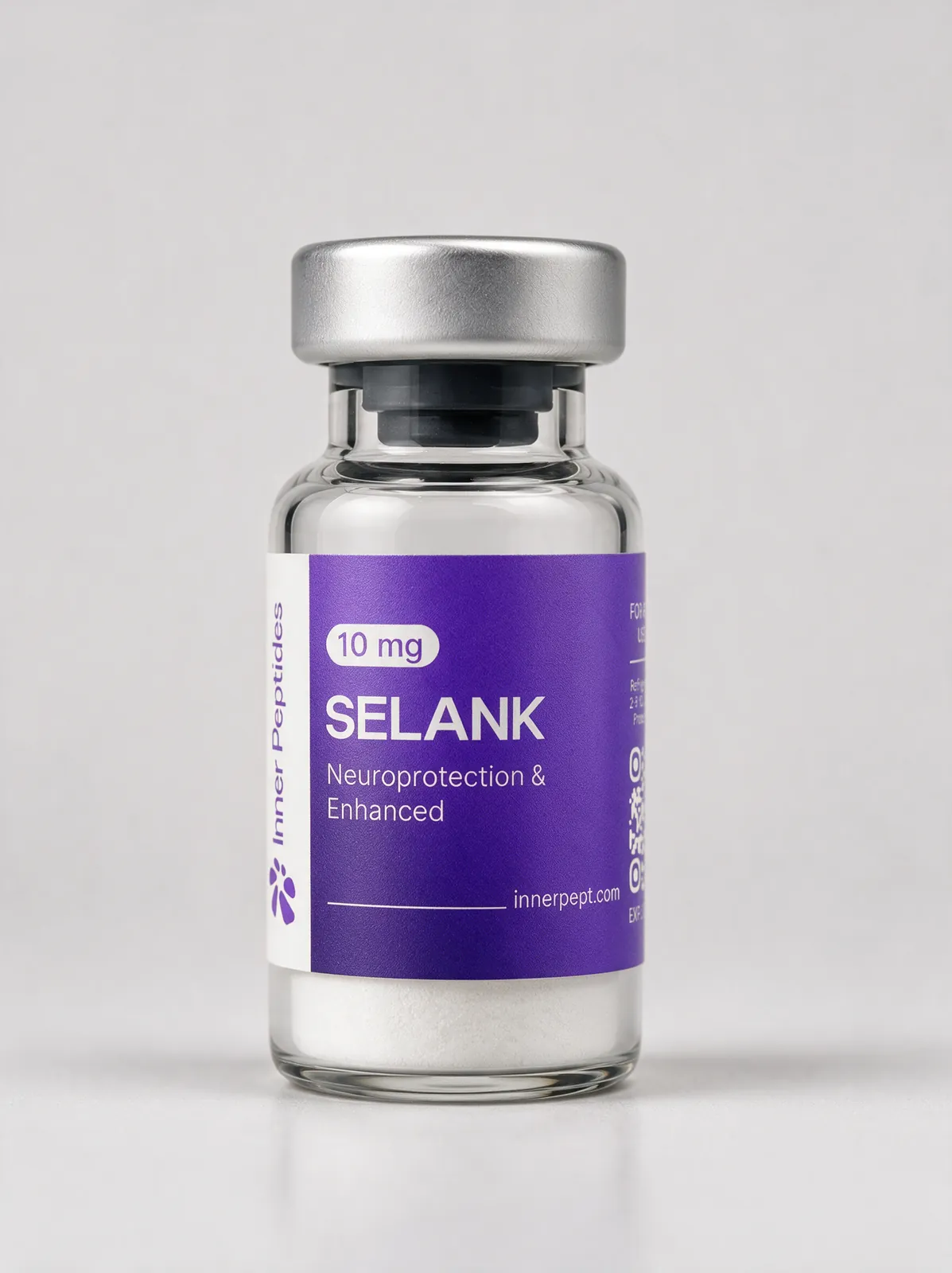
Selank se desarrolló en Rusia, igual que Semax. Es una cadena corta de proteína basada en una molécula que tu cuerpo ya produce como parte de sus defensas. Se estudia sobre todo por su relación con la ansiedad y con cómo tu cuerpo maneja el estrés.
En qué te podría ayudar.
Selank puede resultar de interés para mujeres de 35 años en adelante en quienes el estrés se registra de una manera distinta a como lo hacía antes — un sistema nervioso que se queda encendido, o una tensión de fondo de baja intensidad que llegó junto con el cambio hormonal. Es para quienes quieren atender eso sin sedación y dentro de un panorama completo construido con un profesional de la salud, no de forma aislada.
Las cifras de arriba son la cantidad de péptido liofilizado que contiene el vial — no son una dosis. Tu protocolo, tiempos y duración se definen uno a uno con un profesional de la salud licenciado, a partir de tu historia y tus objetivos.
Los detalles técnicos, por si te interesan.
Todo lo que sigue es opcional: la ciencia detrás de este producto, para quien quiera leerla.
Qué es, en detalle
Selank es un heptapéptido sintético — treonina, lisina, prolina, arginina, prolina, glicina, prolina — desarrollado como un análogo estabilizado de la tuftsina, un péptido inmunitario corto que el cuerpo ya produce. Proviene de la misma línea de investigación rusa que Semax, y se estudia por su actividad dentro de la propia señalización calmante y reguladora del cerebro, no por sedación. La investigación lo describe como ansiolítico sin efecto sedante, junto con una actividad inmunomoduladora heredada de su péptido de origen.
La calma no es algo que haya que enseñarle al cuerpo. La tuftsina ya forma parte de su propio vocabulario de señalización, y las vías en las que Selank interviene — GABA, serotonina, encefalina — son las mismas que el cuerpo usa para bajar del estado de alerta. Bajo estrés sostenido, esas señales pueden quedar atenuadas. Selank se estudia por ayudar a que vuelvan a registrarse, no por reemplazarlas con sedación.
Cómo funciona por dentro
Selank no actúa sobre un solo receptor. La investigación lo describe actuando al mismo tiempo sobre varios de los sistemas reguladores del cerebro, algo que parece hacer posible su estructura derivada de la tuftsina.
- Estructura derivada de la tuftsina. La secuencia Thr-Lys-Pro-Arg-Pro-Gly-Pro es una versión estabilizada de la tuftsina, un péptido inmunitario que el cuerpo ya produce. Esa estabilización estructural es lo que diferencia a Selank de su molécula de origen.
- Modulación de GABA y serotonina. Selank se estudia por modular la señalización GABAérgica y serotoninérgica — los sistemas que el cerebro usa para regular la activación y el estado de ánimo —, algo que la investigación asocia con un efecto ansiolítico que no conlleva sedación.
- Estabilidad del sistema de encefalinas. También se describe a Selank estabilizando el sistema de encefalinas, una de las propias familias de péptidos calmantes del cuerpo. Es un papel de apoyo dentro de una señalización que ya existe, no una señal nueva desde fuera.
- Actividad inmunomoduladora. Por derivar de un péptido inmunitario, Selank también conlleva actividad inmunomoduladora — una de las razones por las que la investigación lo describe actuando sobre más de uno de los sistemas reguladores del cuerpo.
Lo que estudia la investigación
- Se estudia por su papel de apoyo a la propia señalización calmante del cuerpo — GABAérgica y serotoninérgica — en lugar de introducir sedación desde fuera.
- Se explora en investigación clínica para estados relacionados con la ansiedad, incluidas la ansiedad generalizada y la neurastenia, según se describe en la literatura de investigación rusa.
- Podría apoyar la señalización de encefalinas, uno de los sistemas que el cuerpo ya usa para regular desde dentro su propio tono de estrés.
- Conlleva una actividad inmunomoduladora heredada de la tuftsina, su péptido de origen, y por eso la investigación lo observa en más de un sistema a la vez.
- Se plantea como un componente dentro de un plan dirigido por un profesional de la salud, que contempla en conjunto la carga de estrés, el ánimo y el contexto hormonal, en lugar de por separado.
En qué punto está la investigación
La investigación clínica en humanos sobre Selank se realizó en gran medida en Rusia, en el contexto de la ansiedad generalizada y la neurastenia, y buena parte está publicada en ruso. La replicación independiente fuera de ese cuerpo de trabajo sigue siendo limitada, y los datos controlados a largo plazo también son limitados. Es un registro clínico real — más estrecho y menos confirmado de forma independiente que la literatura occidental sobre péptidos mejor estudiados.
Ficha técnica
Conservación y manejo
Antes de empezar.
No publicamos una vía, un formato ni un esquema para Selank. Los 10 mg del vial describen lo que contiene, no lo que alguien toma. La administración se define con un profesional de la salud licenciado durante la consulta, según tu historia clínica y lo que ya forme parte de tu plan.
No le ponemos un plazo. La respuesta al estrés está moldeada por el sueño, el estado hormonal y la carga, y la respuesta de cada persona varía en consecuencia. Ese criterio le corresponde a quien esté leyendo tus análisis, no a nosotros.
Sí. Selank actúa sobre sistemas reguladores del cerebro, y solo debería introducirse bajo la supervisión de un profesional de la salud licenciado que pueda revisar tu historia clínica, cualquier otra cosa que estés tomando, y confirmar si es adecuado para ti.
La investigación lo describe como ansiolítico sin sedación — esa distinción es la razón por la que despierta interés. Se estudia por modular las propias vías calmantes del cuerpo, no por suprimir el estado de alerta, aunque cómo responde cada persona es una pregunta para tu profesional de la salud, no para esta página.
Porque Selank está construido a partir de la tuftsina, un péptido inmunitario. Esa herencia es parte de su perfil, no una nota al margen, y es una de las razones por las que la investigación describe actividad en más de un sistema. Qué significa eso para ti en particular es un tema de consulta.
Cada fórmula de Inner Peptides se analiza de forma independiente antes de enviarse, con un Certificado de Análisis disponible si lo pides. Conoce más sobre nuestro estándar de análisis.