
Semax
En estudio para la atención y el cuidado del cerebro.
Contenido del vial, no una dosis.
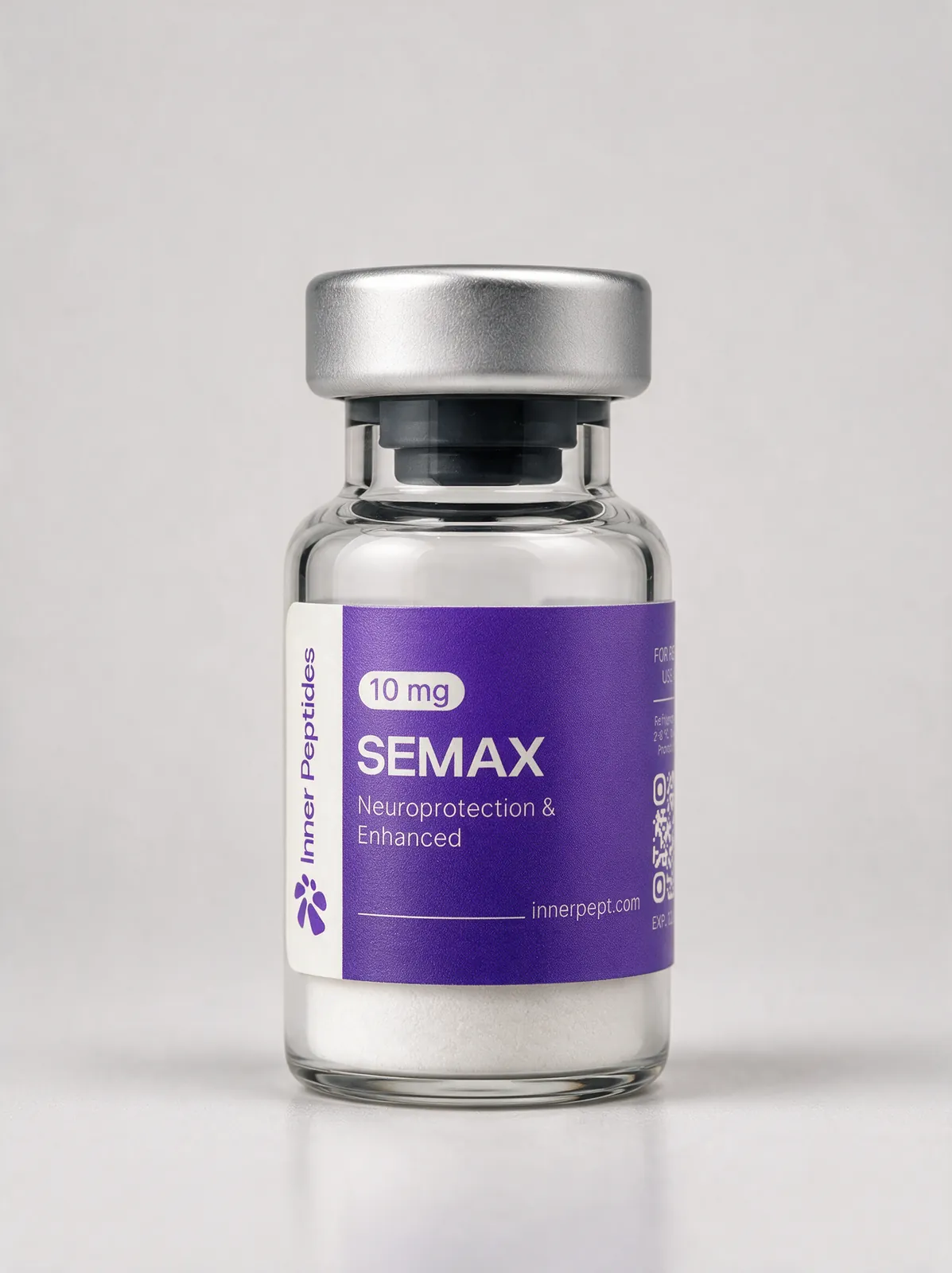
Semax es un péptido pequeño hecho en laboratorio, parecido a un pedacito de una hormona que tu cuerpo ya produce. Se desarrolló en Rusia y se estudia por su relación con el cerebro: la concentración, la atención y el cuidado de las neuronas. No es un estimulante.
En qué te podría ayudar.
Semax es de interés para mujeres de 35 años en adelante que notan que el enfoque, la resistencia mental o la facilidad para sostener la atención han cambiado junto con el cambio hormonal y metabólico. Es para quienes prefieren apoyar la señalización de mantenimiento propia del cerebro antes que recurrir a un estimulante, y quieren que se les describa con claridad el estado de la evidencia antes de decidir.
Las cifras de arriba son la cantidad de péptido liofilizado que contiene el vial — no son una dosis. Tu protocolo, tiempos y duración se definen uno a uno con un profesional de la salud licenciado, a partir de tu historia y tus objetivos.
Los detalles técnicos, por si te interesan.
Todo lo que sigue es opcional: la ciencia detrás de este producto, para quien quiera leerla.
Qué es, en detalle
Semax es un heptapéptido sintético — siete aminoácidos, Met-Glu-His-Phe-Pro-Gly-Pro — construido como análogo de un fragmento interior corto de la ACTH, la secuencia ACTH(4-7), y no de la hormona completa. Se le añadió una cola Pro-Gly-Pro en el extremo para hacer la molécula más estable. Fue desarrollado en el Instituto de Genética Molecular, en Rusia, donde se ha estudiado en relación con la cognición y la atención, y en el contexto de la recuperación tras un accidente cerebrovascular isquémico y de afecciones del nervio óptico.
El BDNF no es algo ajeno que llegue desde fuera. Es la señal de mantenimiento propia del cerebro — la que gobierna cómo se sostienen, se adaptan y se reparan las neuronas. Semax se estudia por su papel en elevar esa señal, no en sustituirla. Aquí no se le enseña nada nuevo al cuerpo. La pregunta de la investigación es si una conversación que el cerebro ya sabe tener puede volver a hacerse audible.
Cómo funciona por dentro
Semax desciende de un fragmento de una hormona que el cuerpo ya produce. Lo que describe la investigación es una vía de señalización: primero la estabilidad estructural y, más adelante en esa vía, los efectos neurotróficos y dopaminérgicos.
- Núcleo ACTH(4-7) estabilizado. La secuencia activa es un fragmento interior corto de la ACTH. Una cola Pro-Gly-Pro estabiliza ese fragmento, y ese cambio estructural es lo que distingue a Semax del fragmento por sí solo.
- Aumento del BDNF. La investigación describe un aumento del factor neurotrófico derivado del cerebro (BDNF), el factor de crecimiento del que depende el cerebro para mantener las neuronas y apoyar la plasticidad — la señalización más asociada a la adaptación.
- Sensibilización dopaminérgica. Junto al BDNF, se describe que Semax sensibiliza la señalización dopaminérgica: no aporta dopamina, sino que cambia qué tan receptivo es ese sistema ya existente a la señal que ya está presente.
- Neuroprotección en isquemia. En modelos experimentales de isquemia — tejido con flujo sanguíneo restringido — Semax mostró actividad neuroprotectora, y de ahí surgió la investigación posterior sobre la recuperación tras un accidente cerebrovascular.
Lo que estudia la investigación
- Se estudia por su papel en el aumento del BDNF, la señal neurotrófica implicada en cómo se mantienen, se adaptan y se reparan las neuronas con el tiempo.
- Podría apoyar la señalización dopaminérgica al aumentar la capacidad de respuesta de un sistema que ya está presente, en lugar de actuar como un estimulante superpuesto a él.
- Se ha explorado en investigación sobre cognición y atención, donde el interés está en la señalización y no en una activación de corto plazo.
- Se está estudiando por su actividad neuroprotectora, observada primero en modelos de isquemia y llevada después a la investigación clínica sobre la recuperación tras un accidente cerebrovascular.
- Está construido sobre una secuencia fragmento que el cuerpo ya produce, estabilizada para que la señal tenga tiempo de ser leída.
En qué punto está la investigación
Semax se ha estudiado en humanos, algo que no puede decirse de muchos péptidos, pero la mayor parte de esa literatura está en ruso y la replicación independiente en Occidente sigue siendo limitada. La señal más clara está en la recuperación tras un accidente cerebrovascular; la investigación sobre cognición y atención es más escasa. La evidencia es desigual, y lo es en una dirección específica que conviene conocer antes de decidir.
Ficha técnica
Conservación y manejo
Antes de empezar.
No publicamos vía, cantidad ni pauta para Semax. Los 10 mg que aparecen en esta página se refieren al contenido del vial, nunca a una dosis. Cómo se prepara y se usa el péptido se define con un profesional de la salud licenciado durante la consulta, a partir de tu historia y de lo que ya forme parte de tu cuidado.
No le ponemos un plazo. La señalización neurotrófica es una variable lenta, el punto de partida es distinto en cada persona, y la respuesta honesta es que nadie puede prometerte una fecha. Tu profesional de la salud puede nombrar los marcadores que importan en tu caso y decidir cuándo volver a revisarlos.
Sí. Esto pertenece a un protocolo supervisado y no a uno autodirigido, con un profesional de la salud licenciado que pueda leer tu historia clínica, ordenarlo frente a cualquier otra cosa que estés tomando y confirmar si encaja con tus objetivos antes de definir cualquier protocolo. No es un compuesto para manejar por cuenta propia.
No. El mecanismo que describe la investigación es neurotrófico y dopaminérgico — aumento del BDNF y mayor capacidad de respuesta de un sistema de dopamina que ya está en su lugar — y no una estimulación directa. Esa distinción importa aquí: el interés está en apoyar una señal que el cerebro ya ejecuta, no en pasar por encima de ella con un empujón externo.
Semax se desarrolló en un instituto ruso y la investigación clínica continuó allí, por eso buena parte de la literatura queda fuera de las revistas en inglés. Eso no la invalida, pero sí significa que la replicación independiente en otros lugares es limitada. Preferimos decirlo con franqueza antes que presentar la base de evidencia como más amplia de lo que es.
Cada fórmula de Inner Peptides se analiza de forma independiente antes de enviarse, con un Certificado de Análisis disponible si lo pides. Conoce más sobre nuestro estándar de análisis.