
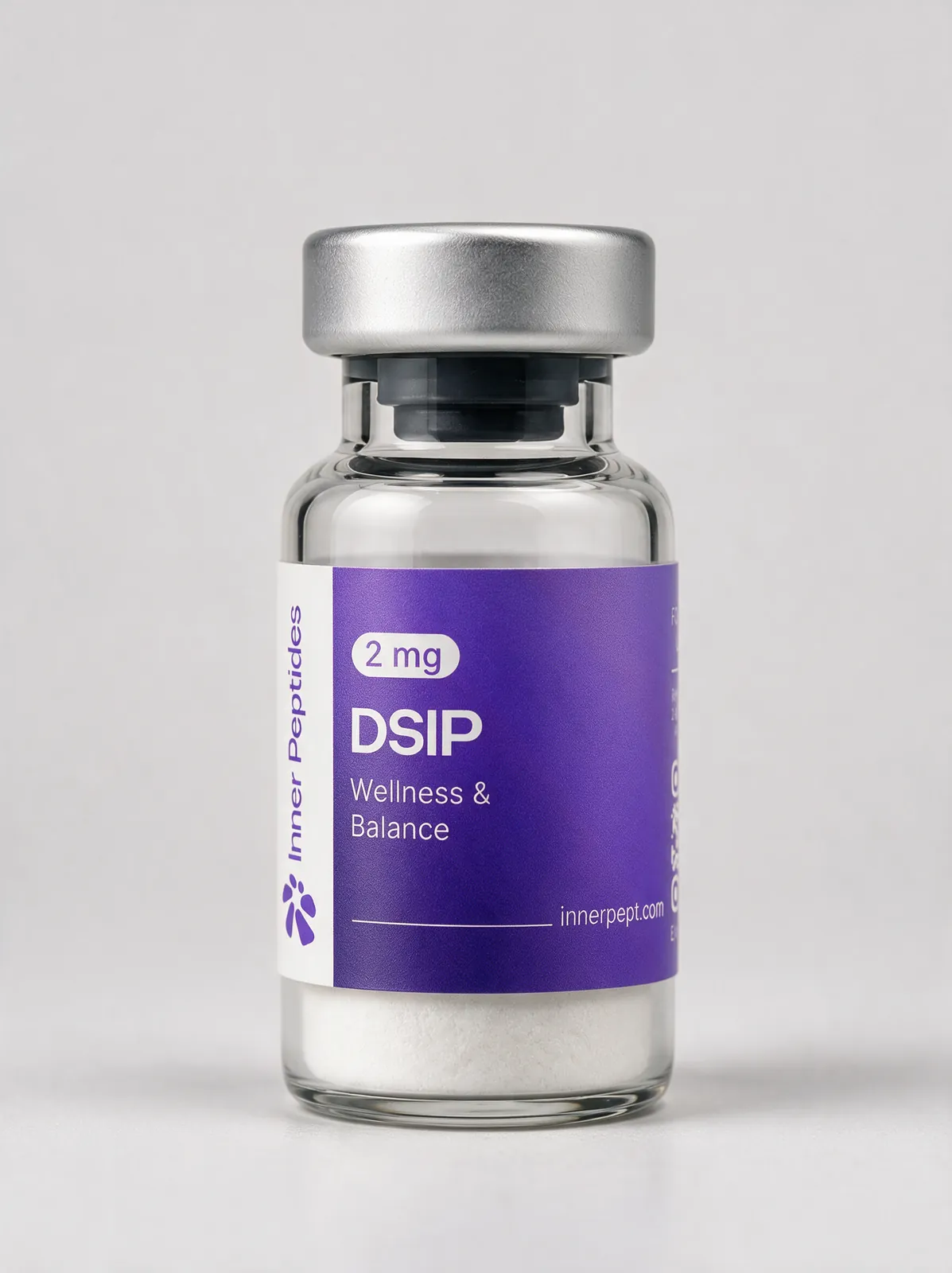
DSIP
Estudiado por su relación con el sueño profundo.
Contenido del vial, no una dosis.
El DSIP, una pieza muy pequeña de proteína, se encontró en la sangre de animales dormidos: por eso su nombre tiene que ver con el sueño profundo. Desde entonces se ha estudiado por su relación con el sueño y el estrés, aunque todavía no se sabe bien cómo funciona.
En qué te podría ayudar.
Para mujeres de 35 años en adelante cuyo sueño se ha vuelto más ligero — despiertan más temprano, afloran más veces a lo largo de la noche, pasan menos horas de la noche en la etapa profunda que antes llegaba sola. El DSIP se ubica en el extremo exploratorio de este catálogo, así que le sirve a quien quiere entender qué se sabe y qué no antes de decidir, y que está atendiendo el sueño como parte de un panorama hormonal más amplio.
Las cifras de arriba son la cantidad de péptido liofilizado que contiene el vial — no son una dosis. Tu protocolo, tiempos y duración se definen uno a uno con un profesional de la salud licenciado, a partir de tu historia y tus objetivos.
Los detalles técnicos, por si te interesan.
Todo lo que sigue es opcional: la ciencia detrás de este producto, para quien quiera leerla.
Qué es, en detalle
DSIP — Delta Sleep-Inducing Peptide — es un nonapéptido: una cadena de nueve aminoácidos, secuencia Trp-Ala-Gly-Gly-Asp-Ala-Ser-Gly-Glu. Se aisló por primera vez en 1977 de la sangre venosa cerebral de conejos dormidos, y se le dio nombre por el estado en el que se encontró, no por algo que se entendiera sobre su funcionamiento. Eso sigue siendo cierto en gran medida. Desde entonces se ha estudiado por su relación con el sueño de ondas lentas, por la amortiguación del estrés y el cortisol y, en trabajos más tempranos, por actividad analgésica y anticonvulsiva — con resultados mixtos y a menudo pequeños.
El sueño no es algo que el cuerpo necesite aprender. La arquitectura ya está escrita — el descenso hacia la profundidad de las ondas lentas, la reparación nocturna que depende de ella. Lo que se altera con el cambio hormonal es la constancia con la que ocurre. El DSIP se encontró dentro del cuerpo, no se diseñó para él: se aisló de la sangre de animales dormidos. Eso lo acerca más a un recordatorio que a una imposición. Si cumple o no, sigue siendo una pregunta abierta.
Cómo funciona por dentro
El DSIP es inusual dentro de este sitio: la señal sobre la que actúa nunca se ha llegado a determinar. Casi cincuenta años después de su aislamiento, no se le ha asignado ningún receptor y las vías propuestas siguen siendo candidatas.
- Sin receptor asignado. No se ha identificado ningún receptor de DSIP. Al péptido se le dio nombre por el estado en el que se encontró, no por un sitio de unión que alguien haya confirmado desde entonces.
- Modulación adrenérgica. Una de las rutas propuestas es la modulación de la señalización adrenérgica — la química del lado de la activación, la que mantiene alerta al sistema nervioso y puede sostenerlo así cuando el descanso debería estar tomando el relevo.
- Modulación GABAérgica. Una segunda propuesta involucra el tono GABAérgico — la señalización inhibitoria que va acallando la actividad neuronal a medida que el cerebro sale de la vigilia y desciende hacia el sueño de ondas lentas.
- Lo que sí se mide. Lo que los investigadores miden es el resultado: el sueño de ondas lentas y los marcadores de estrés y de amortiguación del cortisol. La observación llegó primero; la vía que la explica todavía no ha llegado.
Lo que estudia la investigación
- Se estudia por su asociación con el sueño de ondas lentas — la profundidad de la etapa delta, donde el cuerpo concentra su trabajo reparador nocturno.
- Se explora por un posible papel en la amortiguación del estrés y el cortisol — la señalización que puede impedir que un sistema nervioso se asiente por la noche.
- Se examinó en investigación temprana por actividad analgésica y anticonvulsiva, aunque esas líneas de trabajo siguen siendo preliminares y no son el foco aquí.
- Se estudia como una señal dentro de la propia arquitectura del sueño del cuerpo, y no como un sedante externo, aunque la vía implicada sigue sin identificarse.
- Se considera como una parte de un plan dirigido por un profesional de la salud que ya toma en cuenta los factores hormonales y metabólicos que contribuyen al sueño alterado.
En qué punto está la investigación
La evidencia en humanos es mínima. Casi todo lo que existe son estudios en animales, más estudios humanos pequeños y antiguos — un ensayo doble ciego en adultos con insomnio crónico reportó mejor continuidad del sueño que el placebo, y otros trabajos no han coincidido de manera consistente. El desarrollo farmacéutico se estancó: el mecanismo siguió sin aclararse y los efectos observados fueron pequeños. Listamos el DSIP como investigación emergente porque eso es lo que es.
Ficha técnica
Conservación y manejo
Antes de empezar.
No publicamos vía, dosis ni esquema para el DSIP. No existe un protocolo humano estandarizado al que remitirse y, aun si existiera, lo confirmaríamos caso por caso. La administración se define durante la consulta con un profesional de la salud licenciado, que puede evaluarla frente a tu historia, tu patrón de sueño y todo lo demás que ya forme parte de tu plan.
Eso lo dejamos sin responder aquí, de forma deliberada. Los estudios en humanos son pequeños y sus hallazgos inconsistentes, así que cualquier plazo que publicáramos sería invención y no evidencia. Lo que sugerimos, en cambio, es definir con tu profesional de la salud qué vas a observar realmente — cuánto duermes, con qué frecuencia te despiertas, cómo te sientes a media tarde — y revisarlo con honestidad.
Sí, y aquí más que en cualquier otro punto del catálogo. El DSIP tiene poca evidencia humana detrás, y eso hace que el criterio individual sea más importante, no menos. Un profesional de la salud licenciado puede revisar tu historia clínica, mirar qué otra cosa podría estar alterando tu sueño y decirte si esto tiene un lugar en tu plan o no.
Porque la respuesta honesta es más útil que una respuesta segura. El DSIP se ha estudiado durante casi cincuenta años y todavía no tiene un receptor asignado. Lo listamos como investigación emergente, describimos lo que la evidencia muestra y lo que no muestra, y dejamos la decisión donde corresponde: contigo y tu profesional de la salud.
Describe la cantidad total de péptido que contiene el vial tal como se entrega. No es una dosis, ni una cantidad diaria, ni una recomendación. Lo que se use, si es que se usa algo, es una decisión aparte que se toma con un profesional de la salud licenciado durante la consulta, y no guarda ninguna relación fija con el contenido del vial.
Cada fórmula de Inner Peptides se analiza de forma independiente antes de enviarse, con un Certificado de Análisis disponible si lo pides. Conoce más sobre nuestro estándar de análisis.