
Kisspeptin-10
Un mensajero del cerebro, estudiado en fertilidad y deseo.
Contenido del vial, no una dosis.
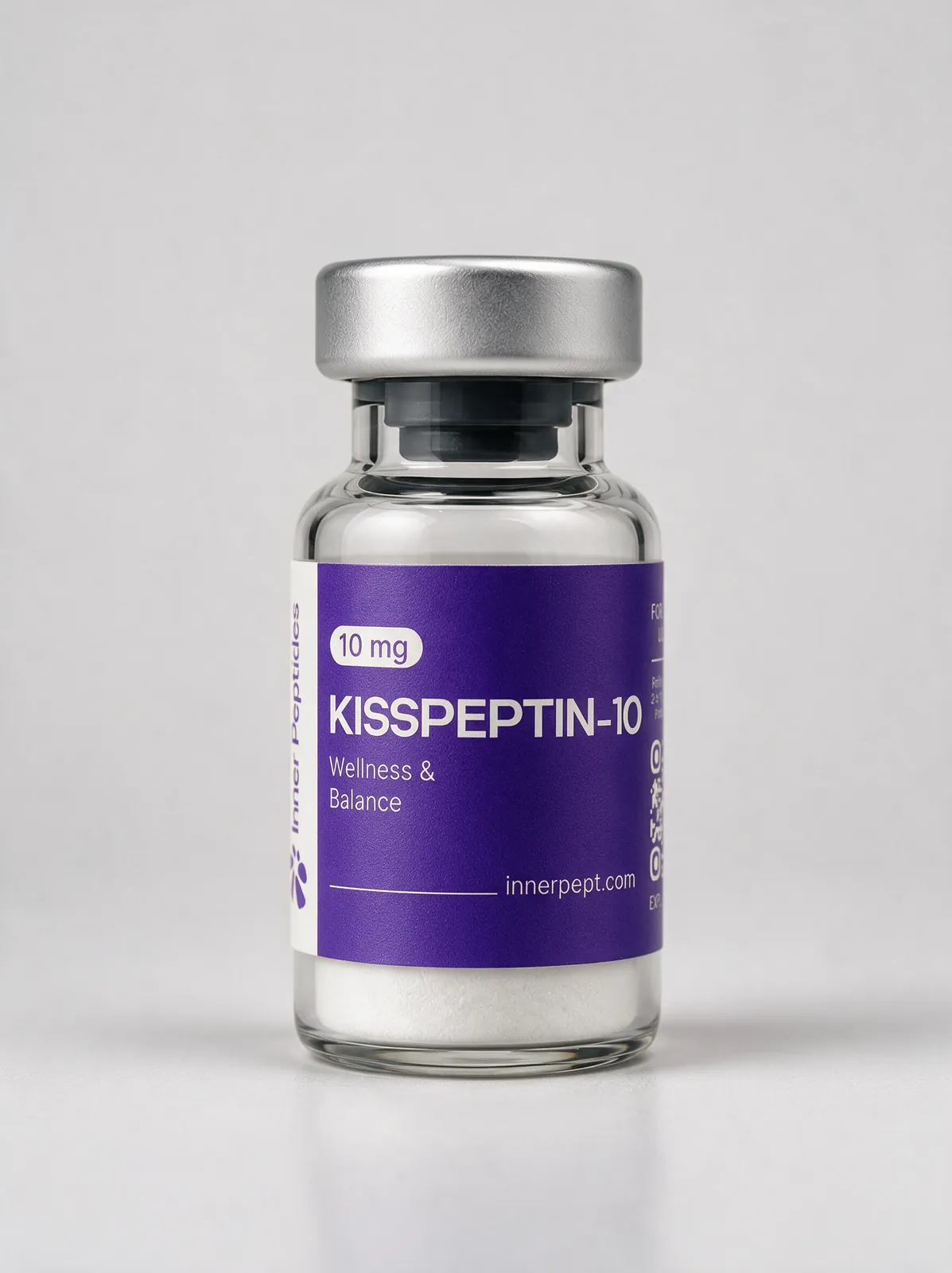
Kisspeptin-10 es un pedacito de un mensajero que tu cuerpo ya produce. No es una hormona sexual: ese mensajero actúa en el cerebro y da la primera orden a las hormonas de tu ciclo. Se estudia por lo que pone en marcha, no porque te aporte hormonas.
En qué te podría ayudar.
Kisspeptin-10 le interesa a mujeres de 35 años en adelante cuyas preguntas se sitúan en el nivel del propio eje hipotálamo-hipófisis: la señalización del ciclo, la endocrinología reproductiva o un deseo que parece originarse por encima de los niveles hormonales. No es un péptido de bienestar general; pertenece a una conversación con un profesional de la salud licenciado que sepa leer el eje completo.
Las cifras de arriba son la cantidad de péptido liofilizado que contiene el vial — no son una dosis. Tu protocolo, tiempos y duración se definen uno a uno con un profesional de la salud licenciado, a partir de tu historia y tus objetivos.
Los detalles técnicos, por si te interesan.
Todo lo que sigue es opcional: la ciencia detrás de este producto, para quien quiera leerla.
Qué es, en detalle
Kisspeptin-10 es un neuropéptido de diez aminoácidos — un fragmento de la molécula más grande llamada metastina — que se ubica en lo más alto de la cascada de hormonas reproductivas, por encima de la GnRH. No es una hormona sexual ni actúa como tal. Su función es señalizar: le habla a las neuronas del hipotálamo que ponen en marcha la secuencia reproductiva, y todo lo que viene después — la GnRH, y luego la LH y la FSH — se desprende de esa primera instrucción. En investigación se estudia por lo que inicia, no por lo que aporta.
La kisspeptina es una señal que tu cuerpo ya escribe; el eje reproductivo siempre se ha abierto con ella. Lo que importa aquí es el patrón, no el volumen: Kisspeptin-10 se estudia por su capacidad de estimular la liberación de GnRH en el ritmo pulsátil que el hipotálamo ya usa, en lugar de imponer un aporte hormonal constante desde afuera. Recordarle al eje cómo empieza, en lugar de tomar el control de lo que viene después.
Cómo funciona por dentro
Kisspeptin-10 actúa en lo alto de la cascada reproductiva, por encima de la GnRH. En lugar de aportar una hormona, activa el receptor que le indica al hipotálamo que inicie su propia secuencia.
- Unión a KISS1R. Kisspeptin-10 se une a KISS1R, también conocido como GPR54, en las neuronas hipotalámicas de GnRH: el mismo receptor que usa la kisspeptina propia del cuerpo para abrir la cascada reproductiva.
- Señalización Gq/11. La activación del receptor se acopla a las proteínas Gq/11, moviliza calcio intracelular y pone en marcha las cascadas ERK1/2 y p38 MAPK dentro de la propia neurona.
- Liberación pulsátil de GnRH. Esas cascadas llevan a la neurona a liberar GnRH con el patrón pulsátil que el hipotálamo ya usa, donde el ritmo forma parte del mensaje tanto como la cantidad.
- LH y FSH, más abajo. La hipófisis lee ese pulso y libera LH y FSH. Kisspeptin-10 no produce esteroides sexuales por sí mismo; actúa más arriba, en el punto donde la secuencia empieza.
Lo que estudia la investigación
- Actúa sobre KISS1R (GPR54), el receptor que usa la kisspeptina propia del cuerpo para abrir la cascada de hormonas reproductivas en su punto más alto.
- Se estudia por su papel al estimular la liberación de GnRH con el patrón pulsátil que el hipotálamo ya usa, y no con uno continuo.
- Se ha investigado en endocrinología reproductiva, incluidos trabajos sobre maduración de ovocitos, amenorrea hipotalámica e hipogonadismo hipogonadotrópico idiopático.
- También se explora en la investigación sobre el deseo sexual, donde el interés se centra en la señalización que ocurre por encima de las hormonas mismas, más que en las hormonas en sí.
- No aporta esteroides sexuales por sí mismo; actúa sobre la capa de señalización que está por encima de ellos, y por eso corresponde a un protocolo dirigido por un profesional de la salud licenciado.
En qué punto está la investigación
Kisspeptin-10 se ha evaluado en estudios en humanos: trabajos de Fase 1 y Fase 2 en endocrinología reproductiva, incluidos ensayos controlados en contextos de fertilidad. No se ha completado ningún programa de Fase 3, así que la base de evidencia es real, pero temprana. Es investigación clínica, no práctica establecida, y la distancia entre una cosa y la otra es exactamente para lo que existe una consulta.
Ficha técnica
Conservación y manejo
Antes de empezar.
No publicamos la vía, la dosis ni el esquema de Kisspeptin-10. Los 10 mg del vial son la cantidad de péptido que contiene, no una dosis. La administración la confirma un profesional de la salud licenciado antes de empezar, a partir de tu historia clínica, tus análisis y lo que ya forme parte de tu cuidado.
No le ponemos un plazo. Kisspeptin-10 actúa sobre un eje de señalización, y lo que ocurre después depende de tu propio punto de partida: hormonal, metabólico y de otro tipo. Tu profesional de la salud puede nombrar los marcadores que importan en tu caso y decidir cuándo volver a mirarlos.
Sí. Kisspeptin-10 actúa sobre el eje hipotálamo-hipófisis, que coordina mucho más que un solo sistema. Solo debería considerarse junto a un profesional de la salud licenciado que pueda revisar tu historia clínica, los medicamentos que tomas y cómo encajaría con todo lo demás que ya estés haciendo.
Porque la señal está pensada para ser breve. Kisspeptin-10 se elimina en unos cuatro minutos, y el receptor sobre el que actúa — KISS1R — se desensibiliza ante la exposición continua en lugar de responder con más fuerza. La señalización propia del cuerpo aquí es pulsátil, así que el patrón de administración importa tanto como cualquier otra cosa, y ese patrón lo define tu profesional de la salud.
No. Kisspeptin-10 no aporta estrógeno, progesterona ni ningún otro esteroide sexual, y tampoco actúa como uno. Actúa sobre un receptor que está un nivel por encima de la GnRH y deja el resto de la secuencia en manos del cuerpo, que es algo muy distinto de reemplazar una hormona y una conversación distinta que tener con tu profesional de la salud.
Cada fórmula de Inner Peptides se analiza de forma independiente antes de enviarse, con un Certificado de Análisis disponible si lo pides. Conoce más sobre nuestro estándar de análisis.