
Cagrilintide
Enfocado en la señal de saciedad de tu cuerpo.
Contenido del vial — presentaciones disponibles, no una dosis.
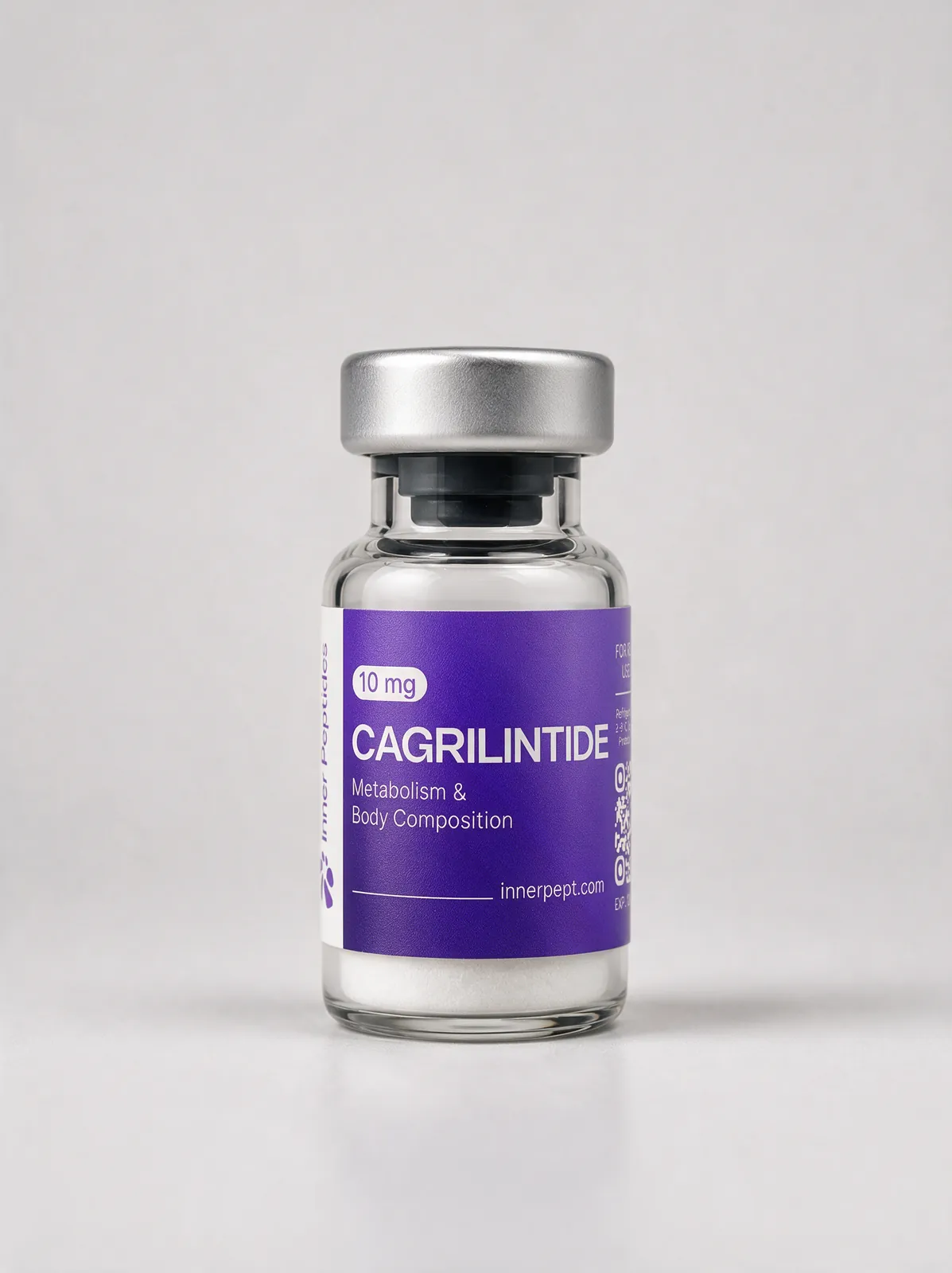
Cagrilintide es un péptido que imita a la amilina, una hormona que se libera cuando comes para avisarle a tu cerebro que ya comiste. Está hecho para durar más que la que produce tu cuerpo. Se estudia por su relación con el apetito y con el azúcar en la sangre después de comer.
En qué te podría ayudar.
Es más relevante para mujeres de 35 años en adelante que notan que el apetito y la energía después de comer ya no se comportan como antes — la saciedad llega tarde, o no llega con claridad — a pesar de mantener los mismos hábitos. Se considera como una parte de un panorama metabólico más amplio, establecido junto a un profesional de la salud licenciado y no adoptado por cuenta propia.
Las cifras de arriba son la cantidad de péptido liofilizado que contiene el vial — no son una dosis, y cuál presentación corresponde es parte de la conversación. Tu protocolo, tiempos y duración se definen uno a uno con un profesional de la salud licenciado, a partir de tu historia y tus objetivos.
Los detalles técnicos, por si te interesan.
Todo lo que sigue es opcional: la ciencia detrás de este producto, para quien quiera leerla.
Qué es, en detalle
Cagrilintide es un análogo de amilina de acción prolongada: un péptido sintético construido para reflejar la amilina, una de las señales que el cuerpo ya usa para comunicar que ha habido una comida. Su duración prolongada es una decisión de diseño, no un detalle secundario: mantiene esa señal estable en lugar de entregarla en ráfagas breves. En la investigación clínica se ha estudiado tanto por sí solo como junto con el agonismo del receptor GLP-1, bajo la premisa de que el apetito y la glucosa posterior a la comida se rigen por más de una línea de comunicación.
La saciedad nunca fue cuestión de fuerza de voluntad: es una señal, enviada después de comer y leída por el cerebro, y como toda señal puede volverse tenue a medida que cambian los patrones metabólicos y hormonales. Cagrilintide se estudia por su papel en devolverle claridad a ese mensaje que ya existe, en lugar de imponer uno nuevo. La instrucción ya es tuya; de lo que se trata es de que llegue intacta.
Cómo funciona por dentro
Cagrilintide actúa sobre la vía de señalización de la amilina. Lo que lo vuelve coherente en lugar de indiscriminado es que un único punto de acción produce varios efectos relacionados, cada uno parte de la forma en que el cuerpo ya interpreta una comida.
- Agonismo del receptor de amilina. Como análogo de amilina de acción prolongada, Cagrilintide se une allí donde se lee la propia señal de amilina del cuerpo, y sostiene esa unión de forma estable en lugar de entregarla como un pico breve después de comer.
- Vaciamiento gástrico más lento. La señalización de la amilina reduce la velocidad a la que se vacía el estómago. Los nutrientes llegan de forma más gradual, y eso cambia el ritmo al que el resto del sistema tiene que responder.
- Señal de saciedad. La misma vía refuerza la saciedad: el mensaje de que la comida ha sido suficiente. Es la señal de plenitud que tu cuerpo ya tiene, leída con más claridad, no un supresor del apetito colocado por encima.
- Glucosa posterior a la comida. Más adelante en la cadena, la glucosa posterior a la comida se aplana en lugar de subir y caer. Esto resulta complementario a la señalización del GLP-1, y por eso ambas vías se estudian tanto juntas como por separado.
Lo que estudia la investigación
- Actúa sobre la vía de la amilina: una señal de saciedad y de glucosa posterior a la comida distinta de la del GLP-1, y no un segundo compuesto que actúa sobre el mismo receptor.
- Se está estudiando por su papel en apoyar la señalización de saciedad, es decir, con qué claridad el cuerpo registra que una comida ha sido suficiente.
- Podría apoyar una respuesta de glucosa más estable después de comer, al reducir la velocidad a la que el estómago se vacía y los nutrientes llegan a la circulación.
- Se explora tanto por sí solo como junto con el agonismo del receptor GLP-1, bajo la premisa de que la regulación del apetito funciona con más de una señal.
- Pensado para un plan dirigido por un profesional que ya considera la composición corporal, la respuesta de glucosa y el cambio hormonal en conjunto, y no como problemas separados.
En qué punto está la investigación
Cagrilintide se ha evaluado en un programa clínico de Fase 3 a gran escala, tanto por sí solo como en combinación con el agonismo del receptor GLP-1, en adultos con y sin diabetes tipo 2. Eso lo ubica entre los péptidos mejor estudiados de este catálogo. Los datos de seguridad a largo plazo siguen acumulándose en ensayos que aún están en curso.
Ficha técnica
Conservación y manejo
Antes de empezar.
Aquí no publicamos un protocolo. La vía, la cantidad y el esquema dependen de tu historia metabólica, tus análisis actuales y todo lo demás que ya forme parte de tu cuidado, y se definen con un profesional de la salud licenciado durante la consulta. Las presentaciones de vial que aparecen en esta página describen lo que contiene el vial, no lo que alguien toma.
Describen el contenido del vial: la cantidad de péptido que hay en el vial antes de reconstituirlo. No son dosis y no deberían leerse como tales. Cuánto se usa de un vial, y durante cuánto tiempo, lo determina tu profesional de la salud según tu perfil individual, nunca el número impreso en la etiqueta.
No. La amilina y el GLP-1 son vías de señalización distintas que coinciden en un terreno parecido: saciedad, vaciamiento gástrico, glucosa posterior a la comida. Cagrilintide es un análogo de amilina, y se ha estudiado tanto por sí solo como junto con el agonismo del receptor GLP-1 precisamente porque los dos son complementarios, no intercambiables.
No le vamos a poner un plazo. La respuesta varía según la función metabólica de partida, el resto del protocolo y cómo se integra el compuesto con la alimentación, el movimiento y el descanso. Ajustar las expectativas a tu propio punto de partida es trabajo de consulta, no de una página como esta.
Sí. Cagrilintide actúa sobre una señalización metabólica que toca a la vez el apetito, la digestión y el manejo de la glucosa, lo que significa que debe revisarse frente a tu historia de salud, tus medicamentos actuales y cualquier otra cosa que ya esté en tu protocolo. Esa revisión ocurre con un profesional de la salud licenciado antes de empezar, no después.
Cada fórmula de Inner Peptides se analiza de forma independiente antes de enviarse, con un Certificado de Análisis disponible si lo pides. Conoce más sobre nuestro estándar de análisis.