
Tirzepatide
Trabaja con dos mensajes que tu cuerpo envía después de comer.
Contenido del vial — presentaciones disponibles, no una dosis.
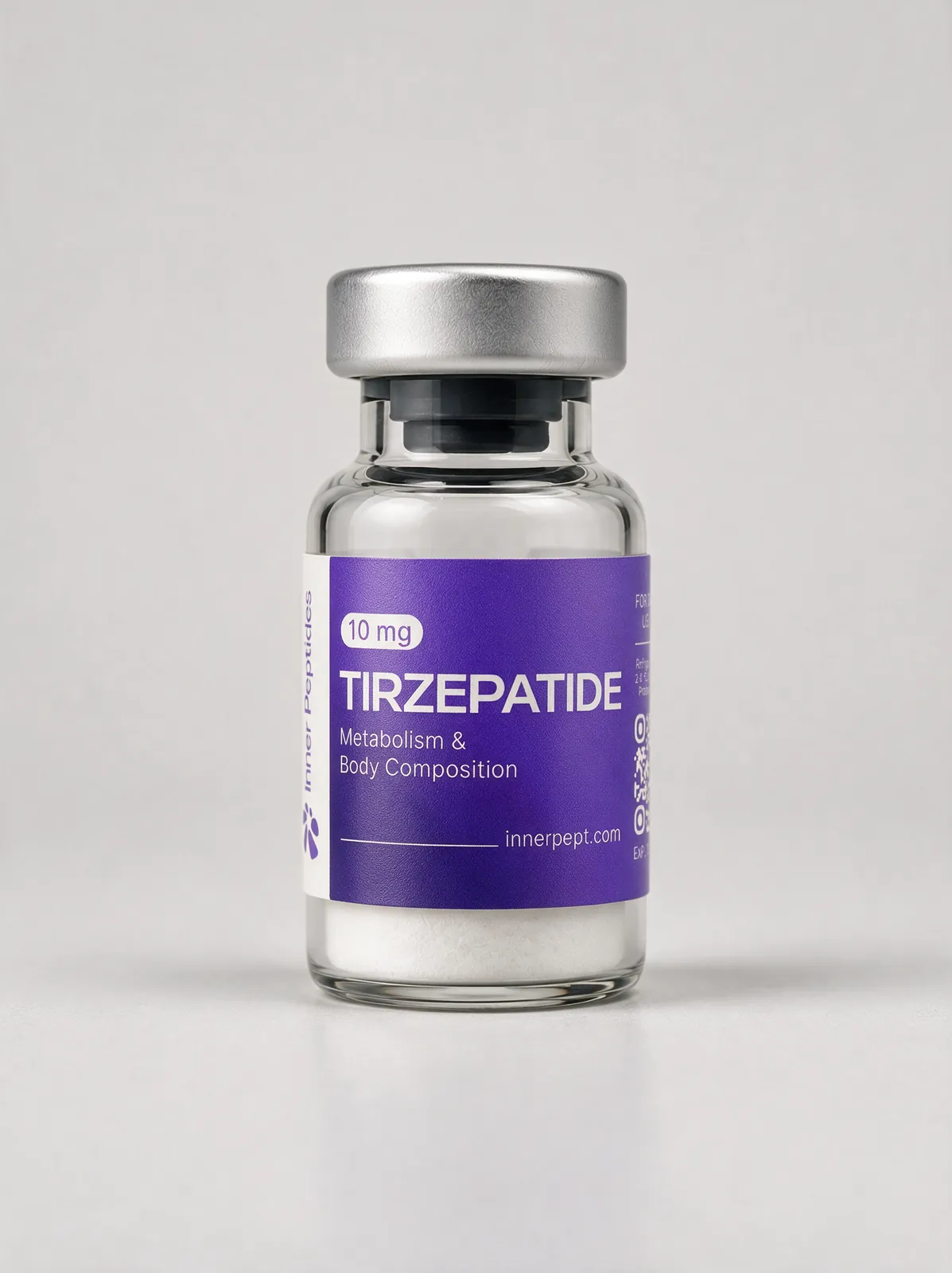
Tirzepatide, una proteína pequeña hecha en laboratorio, trabaja con dos mensajes que tu cuerpo envía después de comer. Con esos mensajes, tu cuerpo decide cuánta insulina liberar y cuándo hacerte sentir llena. Es de los más investigados del catálogo, con estudios grandes en personas que tienen diabetes tipo 2 u obesidad.
En qué te podría ayudar.
Es más pertinente para mujeres de 35 años en adelante que ya trabajan con un profesional de la salud sobre el lado metabólico del cambio hormonal — la respuesta de la glucosa después de comer, la sensibilidad a la insulina, los cambios en la composición corporal — y que buscan una opción con investigación clínica sólida detrás. Se valora frente a tus propios análisis y tu propia historia clínica, nunca como un plan estándar que se aplica a todas por igual.
Las cifras de arriba son la cantidad de péptido liofilizado que contiene el vial — no son una dosis, y cuál presentación corresponde es parte de la conversación. Tu protocolo, tiempos y duración se definen uno a uno con un profesional de la salud licenciado, a partir de tu historia y tus objetivos.
Los detalles técnicos, por si te interesan.
Todo lo que sigue es opcional: la ciencia detrás de este producto, para quien quiera leerla.
Qué es, en detalle
Tirzepatide es un péptido sintético diseñado como agonista dual: una sola molécula que actúa a la vez sobre dos receptores de incretinas — el receptor GIP y el receptor GLP-1. Ambos son receptores de incretinas, parte de la señalización que el cuerpo ya usa para leer una comida y responder a ella. En lugar de aislar uno de esos receptores, Tirzepatide está construido para actuar sobre los dos, tratando las dos ramas de ese sistema como algo conectado y no como dos cosas separadas.
La respuesta de las incretinas no es algo que llegue desde fuera. Tu cuerpo siempre ha liberado estas señales después de comer, y siempre las ha usado para decidir cuánta insulina liberar y cuándo sentir saciedad. Tirzepatide se estudia por su trabajo dentro de esa conversación que ya existe: refuerza una señal que ya está escrita en tu fisiología, en vez de dar una instrucción nueva que venga a reemplazarla.
Cómo funciona por dentro
Tirzepatide es un agonista dual, y eso es una afirmación estructural concreta: una sola cadena peptídica con la forma necesaria para unirse a dos receptores de incretinas distintos. Este es el recorrido que le da su nombre.
- Unión a dos receptores. Una sola molécula actúa sobre el receptor GIP y sobre el receptor GLP-1, en lugar de intervenir en una vía de incretinas y dejar la otra sin tocar.
- La rama del receptor GLP-1. A través del receptor GLP-1, Tirzepatide actúa sobre una de las dos vías de incretinas: la más conocida de las dos, y la que la mayoría de los compuestos de esta categoría aborda por sí sola.
- La rama del receptor GIP. El receptor GIP aporta la segunda entrada de incretinas. Actuar sobre él desde la misma molécula es lo que distingue a un agonista dual de uno de un solo receptor, y es la base del interés de la investigación.
- Señalización metabólica coordinada. Como ambas ramas se activan juntas, Tirzepatide se estudia por su papel en el manejo de la glucosa, la regulación del apetito y la composición corporal como un solo sistema conectado, y no como tres dianas separadas.
Lo que estudia la investigación
- Actúa sobre dos receptores de incretinas — GIP y GLP-1 — desde una sola molécula, en vez de atender solo una rama de la señal que aparece después de comer.
- Se estudia por su papel en el manejo de la glucosa y en la señalización de la insulina, el sistema que tu cuerpo ya usa para gestionar lo que ocurre después de una comida.
- Se explora por su relación con la regulación del apetito y la saciedad dentro de un panorama metabólico más amplio, no como una intervención aislada sobre el apetito.
- Ha sido evaluado en programas clínicos controlados de gran escala, lo que lo sitúa entre los compuestos mejor caracterizados de esta categoría.
- Se plantea como un componente dentro de un protocolo diseñado por un profesional, que considera en conjunto tus análisis, tu historia clínica y tu composición corporal.
En qué punto está la investigación
Tirzepatide es uno de los compuestos más estudiados de este catálogo. Ha sido evaluado en dos grandes programas clínicos controlados: uno en diabetes tipo 2 y otro en obesidad. Esa es una base de evidencia más sólida que la que tienen la mayoría de los péptidos. Aun así, no te dice cómo se comportará el compuesto en tu cuerpo, y para eso está la consulta.
Ficha técnica
Conservación y manejo
Antes de empezar.
La administración no es algo que definamos en esta página. Las cifras de 10 mg, 15 mg y 30 mg describen cuánto compuesto contiene un vial: no son dosis. La vía, la cantidad y la frecuencia se confirman uno a uno con un profesional de la salud licenciado que haya revisado tus marcadores metabólicos, tu historia clínica y todo lo demás que ya forme parte de tu cuidado.
No le ponemos un plazo, y si lo hiciéramos nos lo estaríamos inventando. La respuesta metabólica depende de tu punto de partida, del protocolo pensado para ti y de lo demás que esté en su lugar: sueño, alimentación, movimiento. Tu profesional de la salud puede decirte qué marcadores vale la pena seguir y cuándo revisarlos.
Sí. Tirzepatide actúa directamente sobre el sistema de las incretinas, y solo debería introducirse bajo el acompañamiento de un profesional de la salud licenciado que pueda revisar tu historia clínica, tus medicamentos actuales y tus marcadores metabólicos antes de confirmar si es apropiado y cómo debe usarse. Esa revisión no es un trámite: es el protocolo.
Significa que una sola molécula actúa sobre dos receptores en lugar de uno — el receptor GIP y el receptor GLP-1 — en vez de abordar una única vía de incretinas. El interés de la investigación está en lo que ocurre cuando las dos ramas de la señal posterior a la comida son activadas por la misma molécula, y no tratadas por separado.
No. Tirzepatide se estudia como una entrada más dentro de un sistema metabólico que también responde al sueño, a la ingesta de proteína, al entrenamiento de fuerza y al estrés. Los profesionales suelen ubicarlo dentro de ese plan más amplio, no como un sustituto de él.
Cada fórmula de Inner Peptides se analiza de forma independiente antes de enviarse, con un Certificado de Análisis disponible si lo pides. Conoce más sobre nuestro estándar de análisis.