
MOTS-c
Estudiado por su papel en la energía de tus células.
Contenido del vial — presentaciones disponibles, no una dosis.
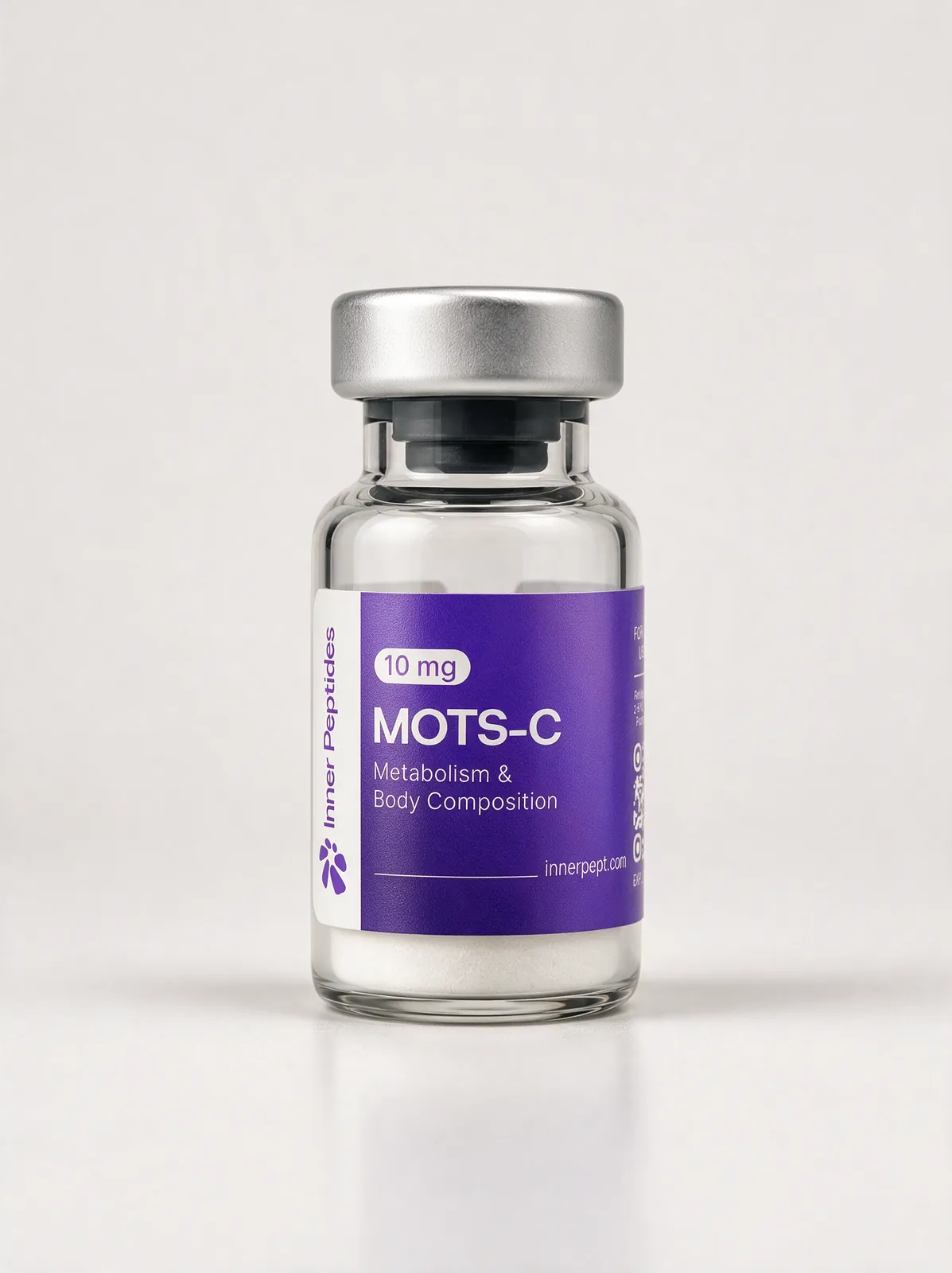
MOTS-c nace en tus mitocondrias, las partes de cada célula que producen energía. Es un péptido, una proteína muy pequeña, y los estudios lo ven como parte de cómo la célula "avisa" cuánta energía tiene. Tu cuerpo lo fabrica por sí solo, pero con los años cada vez menos.
En qué te podría ayudar.
Es más relevante para mujeres de 35 años en adelante que están siguiendo de cerca sus cambios metabólicos — la energía, la respuesta a la glucosa, la manera en que el cuerpo alterna entre fuentes de combustible — y que prefieren entender un mecanismo antes de adoptarlo. MOTS-c se ajusta a quienes se sienten cómodas con un panorama de investigación emergente y todavía en gran medida preclínico, considerado como una parte de un plan construido junto a un profesional de la salud licenciado.
Las cifras de arriba son la cantidad de péptido liofilizado que contiene el vial — no son una dosis, y cuál presentación corresponde es parte de la conversación. Tu protocolo, tiempos y duración se definen uno a uno con un profesional de la salud licenciado, a partir de tu historia y tus objetivos.
Los detalles técnicos, por si te interesan.
Todo lo que sigue es opcional: la ciencia detrás de este producto, para quien quiera leerla.
Qué es, en detalle
MOTS-c es un péptido de origen mitocondrial: una secuencia de 16 aminoácidos codificada dentro del ADN mitocondrial y no en el núcleo de la célula. Fue identificado en 2015 por investigadores de la University of Southern California. Como nace dentro de las mitocondrias, se lo entiende como parte de la manera en que esos orgánulos comunican hacia afuera el estado energético de la célula. La investigación lo describe como un "mimético del ejercicio": una molécula que interviene en vías asociadas a la demanda metabólica. La cantidad que el cuerpo produce por sí mismo disminuye con la edad.
MOTS-c no es un mensaje que el cuerpo tenga que aprender. Está escrito en el ADN mitocondrial y forma parte de cómo las células informan su estado energético desde mucho antes de que alguien le pusiera nombre. Lo que cambia con la edad es el volumen, no el vocabulario: los niveles endógenos bajan. Apoyar esta señal es pedirle a una conversación que ya existe que vuelva a hacerse oír, no instalar una nueva.
Cómo funciona por dentro
La investigación describe a MOTS-c como un "mimético del ejercicio": una señal que llega a la maquinaria con la que la célula detecta su estado energético. El recorrido va del ADN mitocondrial al ciclo del folato, de ahí a AMPK y luego al núcleo.
- Origen mitocondrial. MOTS-c está codificado dentro del ADN mitocondrial y no en el núcleo de la célula: un mensaje de 16 aminoácidos que las propias mitocondrias escriben. Los niveles endógenos disminuyen con la edad.
- Acumulación en el ciclo del folato. La investigación describe que MOTS-c actúa sobre el ciclo del folato, donde se acumula el intermediario AICAR. Esa acumulación es el primer eslabón de la cadena, no un efecto estimulante añadido por encima.
- Activación de AMPK. El aumento de AICAR activa AMPK, la enzima que las células usan para leer su estado energético y ajustar cómo manejan el combustible. Esta es la acción principal que la investigación describe para MOTS-c.
- Traslocación al núcleo. Bajo estrés metabólico, se ha observado que MOTS-c entra al núcleo, donde participa en la regulación de la expresión génica: una capa más lenta y adaptativa de la misma señal.
Lo que estudia la investigación
- Podría apoyar la señalización con la que el cuerpo detecta su propio estado energético a través de AMPK, una vía celular que ya existe, en lugar de actuar como un estimulante externo.
- Se está estudiando por su papel en la sensibilidad a la insulina y el manejo de la glucosa, sobre todo en modelos animales más que en protocolos humanos establecidos.
- Se explora en investigación preclínica para el metabolismo de los lípidos y la resistencia al aumento de peso, como una línea de indagación dentro de una ciencia metabólica más amplia.
- Se estudia por una posible relación con el rendimiento físico y los años de vida saludable, en línea con su descripción en la investigación como señal que imita al ejercicio.
- Podría considerarse como un elemento dentro de un plan metabólico dirigido por un profesional de la salud licenciado, junto con el trabajo de nutrición, movimiento y sueño que ya esté en marcha.
En qué punto está la investigación
La evidencia sobre MOTS-c es principalmente preclínica: estudios en células y en animales. Existen datos en humanos, pero siguen siendo iniciales y limitados. Su desarrollo ha avanzado despacio, en parte porque el péptido es inestable, tiene poca biodisponibilidad y dura poco en circulación. Su evidencia se ubica en el nivel emergente, y las razones son prácticas más que teóricas.
Ficha técnica
Conservación y manejo
Antes de empezar.
No publicamos una vía, una dosis ni un esquema para MOTS-c. Los viales se presentan en 10 mg y 20 mg, y esa cifra describe el contenido del vial: no es una dosis. Cómo se prepara y se usa el péptido se define de forma individual con un profesional de la salud licenciado durante la consulta, a partir de tu historia y tus objetivos.
No hay un plazo que podamos publicar con honestidad. La señalización metabólica cambia de forma gradual, la respuesta varía en cada persona y la base de investigación aquí es lo bastante temprana como para que cualquier ventana de tiempo prometida fuera un invento y no evidencia. Tu profesional puede identificar qué marcadores vale la pena seguir y revisarlos contigo a lo largo del protocolo.
Sí. Nada de lo que hay aquí está pensado para empezarse en solitario. Un profesional de la salud licenciado debería revisar tu historia clínica, tener en cuenta todo lo demás que ya forme parte de tu cuidado y decidir si tiene lugar en tu plan. Esa conversación es donde se definen la dosis, el formato y si es adecuado para ti.
No, y el término se malinterpreta con facilidad. Describe una coincidencia en la señalización: MOTS-c interviene en AMPK, una de las vías que la actividad física también moviliza. La investigación sobre esta comparación es preclínica. Nada en ella sugiere que el péptido sustituya al entrenamiento, y en Inner Peptides no lo presentaríamos así.
En parte por razones prácticas. El péptido es difícil de trabajar: no es especialmente estable, su biodisponibilidad es baja y se elimina rápido. Esas propiedades han frenado el estudio formal más que cualquier duda sobre la biología de fondo. Es una limitación real, y por eso ubicamos a MOTS-c dentro de la investigación emergente.
Cada fórmula de Inner Peptides se analiza de forma independiente antes de enviarse, con un Certificado de Análisis disponible si lo pides. Conoce más sobre nuestro estándar de análisis.