
Epithalon
Estudiado por su relación con el reloj interno del cuerpo.
Contenido del vial, no una dosis.
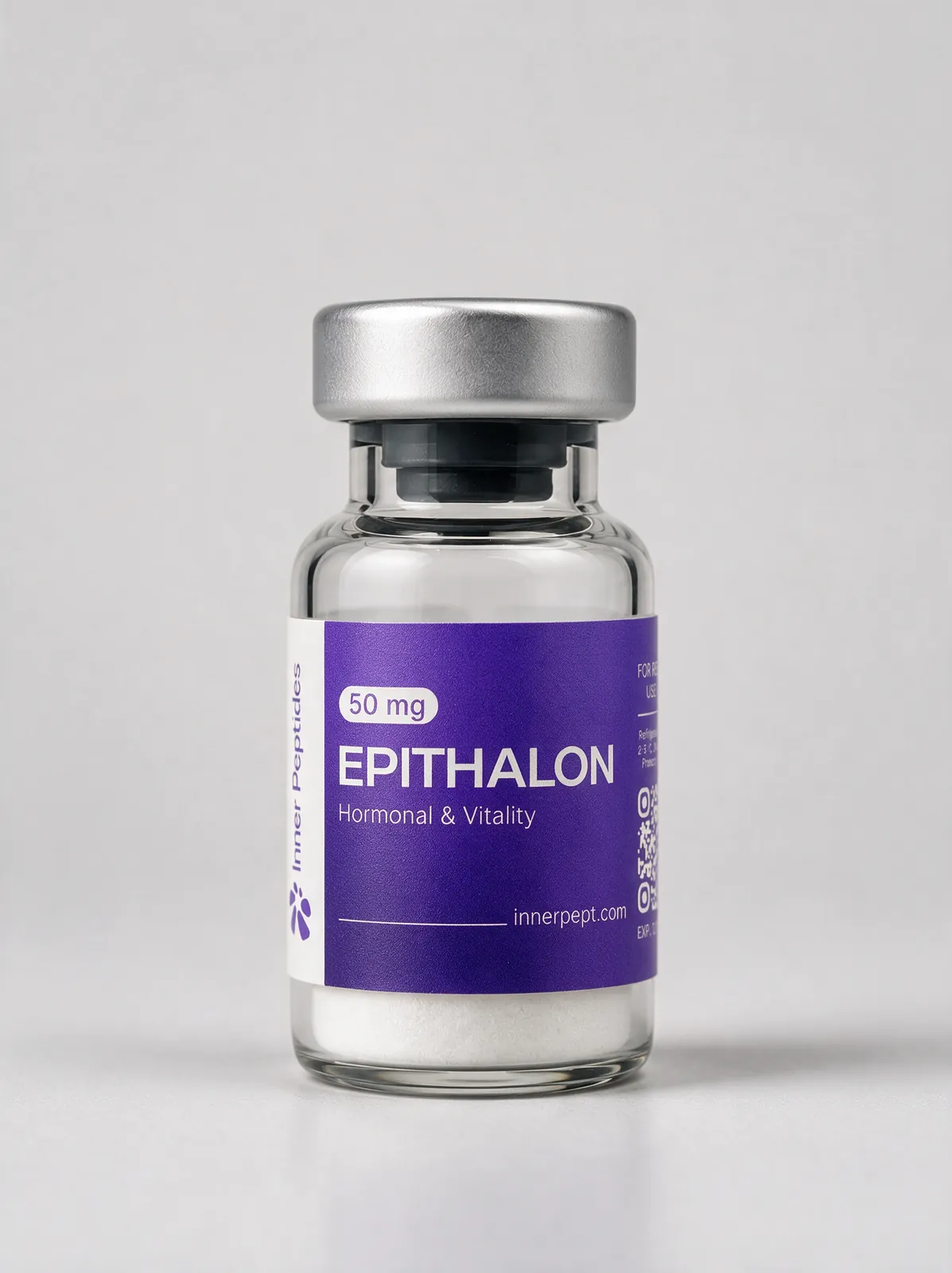
Epithalon es un péptido muy pequeño, hecho en laboratorio. Está inspirado en un extracto de la glándula pineal, una parte del cerebro que regula la melatonina y el reloj interno del cuerpo. Se estudia por su relación con el envejecimiento de las células y con ese reloj interno.
En qué te podría ayudar.
Epithalon le interesa a mujeres de 35 años en adelante que piensan en décadas y no en semanas: las que se acercan al envejecimiento celular y al ritmo circadiano como una pregunta de largo plazo y no como una corrección rápida. Dado que buena parte de la investigación sigue siendo preclínica, le queda bien a alguien a quien no le incomoda leer la evidencia con honestidad y decidir desde ahí, junto a un profesional de la salud.
Las cifras de arriba son la cantidad de péptido liofilizado que contiene el vial — no son una dosis. Tu protocolo, tiempos y duración se definen uno a uno con un profesional de la salud licenciado, a partir de tu historia y tus objetivos.
Los detalles técnicos, por si te interesan.
Todo lo que sigue es opcional: la ciencia detrás de este producto, para quien quiera leerla.
Qué es, en detalle
Epithalon es un tetrapéptido sintético: cuatro aminoácidos en secuencia, Ala-Glu-Asp-Gly, abreviada AEDG. Se modeló sobre Epithalamin, un extracto de la glándula pineal, y se desarrolló en el Instituto de Biorregulación y Gerontología de San Petersburgo, dirigido por Vladimir Khavinson. La glándula pineal gobierna la liberación de melatonina y la sincronización circadiana que sostiene el descanso y la reparación. Epithalon pertenece a una clase de péptidos muy cortos que se estudian como biorreguladores: secuencias lo bastante breves como para funcionar como señales y no como material estructural, investigadas por su influencia en el comportamiento de las células.
El punto de partida fue un extracto de la glándula pineal, no una abstracción de laboratorio: Epithalon se construyó para hacerle eco a una señal que la propia glándula que marca el tiempo en tu cuerpo ya emite. Esa es toda la premisa aquí: no instalar una instrucción nueva, sino devolverle una conocida a sistemas cuyo ritmo y cuyo mantenimiento celular tienden a atenuarse con los años. La señal es del cuerpo; el péptido solo la repite.
Cómo funciona por dentro
La investigación sobre Epithalon se concentra en dos líneas conectadas: la enzima telomerasa, que mantiene los extremos de los cromosomas, y la señalización pineal-melatonina, que marca el ritmo circadiano. La mayor parte de este trabajo es preclínica.
- Una señal de cuatro aminoácidos. Epithalon es la secuencia Ala-Glu-Asp-Gly, modelada sobre el extracto pineal Epithalamin. Con cuatro aminoácidos, se estudia como biorregulador: una señal, no una proteína estructural.
- Activación de la telomerasa. En fibroblastos fetales humanos in vitro, AEDG se estudia por su activación de la telomerasa, la enzima que reconstruye los telómeros, los capuchones protectores de los extremos de los cromosomas.
- Alargamiento de los telómeros in vitro. Esa misma línea de trabajo en cultivo celular reporta un alargamiento de los telómeros, y en 2025 un estudio independiente en Brunel University London retomó ese hallazgo. Todo esto ocurre en células, no en personas.
- Señalización circadiana y melatonina. Fiel a su origen pineal, Epithalon también se estudia por la regulación del ritmo circadiano y de la melatonina, junto con criterios de valoración de longevidad examinados en modelos con roedores.
Lo que estudia la investigación
- Se está estudiando por su activación de la telomerasa, la enzima que mantiene los telómeros en los extremos de los cromosomas.
- Se explora su papel en la regulación circadiana y de la melatonina, en línea con su origen en un extracto de la glándula pineal.
- Podría apoyar la señalización de mantenimiento que el cuerpo ya tiene, en lugar de introducir una instrucción ajena: la secuencia está modelada sobre una señal de origen pineal.
- Se investiga en modelos con roedores por criterios de valoración relacionados con la longevidad, dentro de un cuerpo de trabajo más amplio sobre péptidos biorreguladores y envejecimiento celular.
- Se contempla como un componente de un protocolo de horizonte largo dirigido por un profesional, y no como una intervención aislada con un punto final definido.
En qué punto está la investigación
La base de evidencia de Epithalon es en gran medida preclínica: trabajo en cultivo celular con fibroblastos fetales humanos, incluido un estudio independiente que lo replicó en Brunel University London en 2025, junto con estudios de longevidad en roedores. Las cohortes observacionales rusas más antiguas usaron el extracto pineal original, no el péptido sintético. Ningún ensayo clínico controlado en humanos ha medido la longitud de los telómeros antes y después del AEDG sintético.
Ficha técnica
Conservación y manejo
Antes de empezar.
No publicamos un protocolo. Epithalon se entrega en un vial de 50 mg, y esa cifra es el contenido total del vial: no es una dosis. La forma de uso, la cantidad y la frecuencia se definen uno a uno con un profesional de la salud licenciado durante la consulta, a partir de tu historia y de lo que ya forme parte de tu cuidado.
Cualquier fecha que imprimiéramos aquí sería invención y no evidencia. Los criterios de valoración frente a los que se estudia Epithalon — la biología de los telómeros, la sincronización circadiana — no son cosas que se sientan en un calendario, y gran parte de ese trabajo se ha hecho en células y en animales, no en personas. Ajustar las expectativas a tu propio punto de partida es tarea de la consulta, no de una página como esta.
Sí. El primer paso es que alguien licenciado decida si debe haber un segundo: revisar tu historia clínica, considerarla junto a todo lo que ya esté en tu protocolo y confirmar si es apropiado para ti. Esa conversación es donde se deciden la cantidad, la forma de uso y la duración; no en esta página.
Eso no se ha demostrado. Los hallazgos sobre telomerasa y alargamiento de telómeros vienen de cultivo celular, en fibroblastos fetales humanos, incluido un estudio independiente que los replicó en Brunel University London en 2025. Ningún ensayo clínico controlado en humanos ha medido la longitud de los telómeros antes y después del AEDG sintético. Preferimos decirlo así de claro antes que dar a entender otra cosa.
Epithalamin es el extracto pineal original; Epithalon es la secuencia sintética de cuatro aminoácidos modelada sobre él. La distinción importa al leer la literatura: las cohortes observacionales rusas más antiguas se hicieron con el extracto original, no con AEDG sintético. Por eso esas observaciones en personas no se trasladan limpiamente al péptido en sí.
Cada fórmula de Inner Peptides se analiza de forma independiente antes de enviarse, con un Certificado de Análisis disponible si lo pides. Conoce más sobre nuestro estándar de análisis.