NAD+ 500
Una molécula que tus células usan para producir energía.
Contenido del vial, no una dosis.
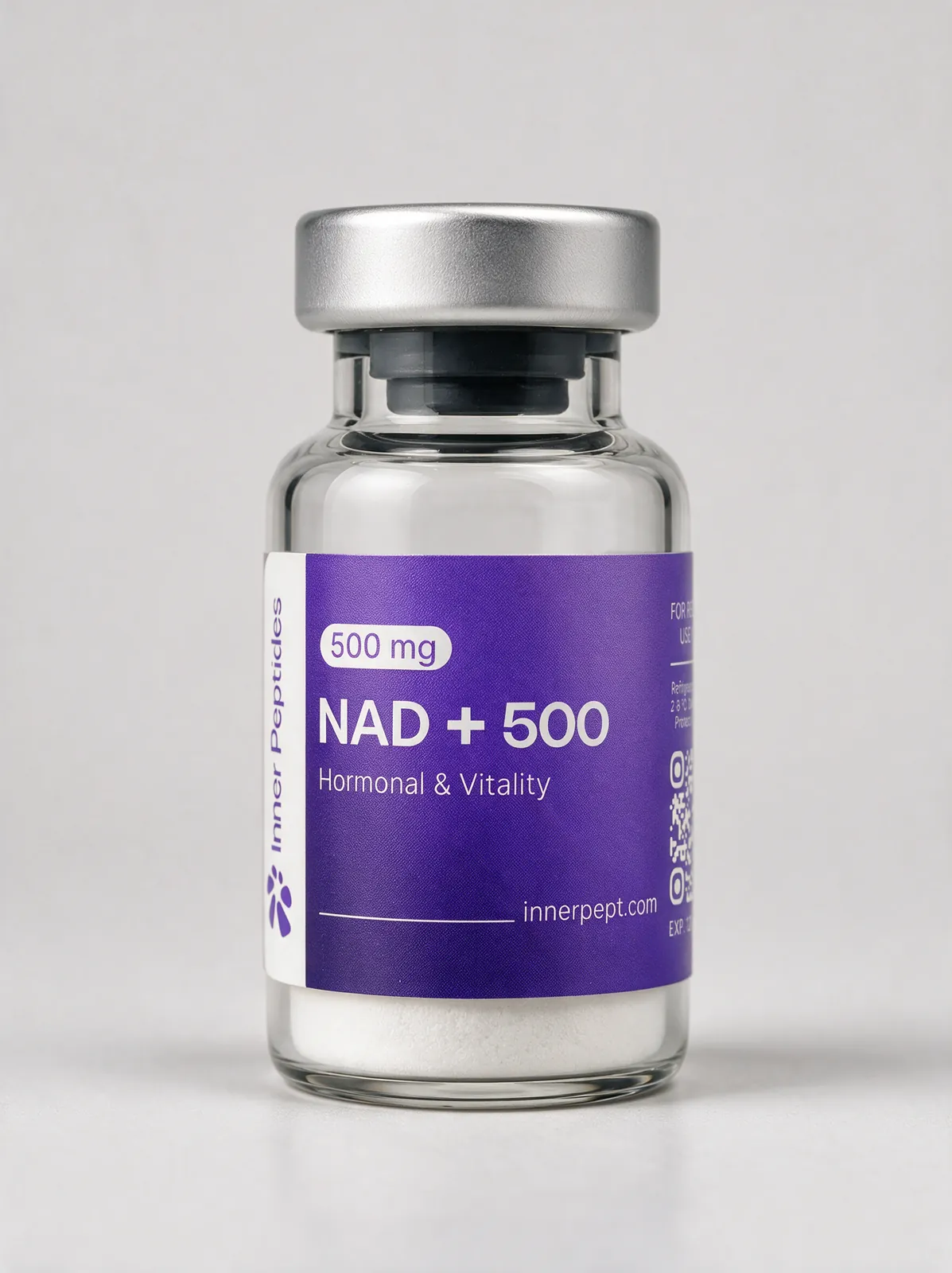
El NAD+ es una molécula que todas tus células necesitan para convertir lo que comes en energía y para repararse. Con la edad, sus niveles tienden a bajar. Se está estudiando si reponerlo puede apoyar tu energía y tu recuperación — la evidencia todavía es inicial, y te lo decimos claro.
En qué te podría ayudar.
NAD+ 500 suele interesar a mujeres de 35 años en adelante que piensan en términos de energía y mantenimiento celular, más que en buscar un efecto que se sienta el mismo día. Encaja con quienes prefieren entender qué hace realmente una molécula — y hasta dónde llega hoy la evidencia que la respalda — antes de decidir si tiene lugar en su protocolo.
Las cifras de arriba son la cantidad de péptido liofilizado que contiene el vial — no son una dosis. Tu protocolo, tiempos y duración se definen uno a uno con un profesional de la salud licenciado, a partir de tu historia y tus objetivos.
Los detalles técnicos, por si te interesan.
Todo lo que sigue es opcional: la ciencia detrás de este producto, para quien quiera leerla.
Qué es, en detalle
NAD+ es una coenzima, no un péptido — la excepción de este catálogo, y lo es a propósito. Desde el punto de vista estructural, es adenosina unida a ribósido de nicotinamida por un puente de pirofosfato. Desde el funcional, es una de las moléculas más utilizadas dentro de la célula: transporta electrones en las reacciones centrales del metabolismo energético, y las enzimas que regulan y reparan la consumen como materia prima.
Casi todo este catálogo funciona recordándole al cuerpo una señal que ya envía. NAD+ está una capa más abajo: no es un mensaje, sino la moneda con la que se pagan esos mensajes — la coenzima con la que ya funciona la maquinaria de energía y reparación de la propia célula. Aportarla no es una instrucción para hacer algo nuevo. Es reponer el material que ese sistema ya estaba hecho para usar.
Cómo funciona por dentro
NAD+ no se une a un receptor. Funciona como sustrato: pasa de una enzima a otra en tres papeles bien caracterizados, y cada uno es un paso del metabolismo o del mantenimiento que la célula ya realiza de forma continua.
- Transportador de electrones (redox). En la glucólisis, el ciclo de Krebs y la fosforilación oxidativa, NAD+ acepta y libera electrones — el vehículo por el que los nutrientes se convierten en energía celular utilizable.
- Co-sustrato de las sirtuinas. Las sirtuinas no pueden actuar sin NAD+; la enzima lo consume como co-sustrato obligatorio. Que haya NAD+ disponible es, por lo tanto, la condición previa para que esa familia reguladora pueda funcionar.
- Reparación del ADN mediada por PARP. NAD+ actúa además como el donante de ADP-ribosa del que se sirven las enzimas PARP cuando llevan a cabo la reparación del ADN, lo que vincula la reserva de coenzima directamente con el mantenimiento del genoma.
Lo que estudia la investigación
- Se estudia como el transportador de electrones que ocupa el centro de la glucólisis, el ciclo de Krebs y la fosforilación oxidativa — las vías energéticas fundamentales de la célula.
- Podría apoyar a las enzimas que dependen de él, entre ellas las sirtuinas, que necesitan NAD+ como co-sustrato para poder actuar.
- Se explora por su papel en la reparación del ADN, donde funciona como el donante de ADP-ribosa del que se sirven las enzimas PARP.
- Funciona como material que ya utiliza la maquinaria metabólica del cuerpo, y no como un estimulante que impone un efecto desde fuera.
- Se está estudiando por la energía y el mantenimiento celular dentro de un plan dirigido por un profesional, no como una intervención aislada.
En qué punto está la investigación
La bioquímica del NAD+ está bien establecida. Lo que se sabe sobre el NAD+ inyectable, no. La evidencia en humanos sigue siendo mínima y preliminar: sobre todo trabajo en células y animales, junto con estudios piloto pequeños. Una revisión sistemática de 2020 describió los resultados como prometedores pero todavía especulativos, y no vemos razón para hablar de ellos con más confianza que esa.
Ficha técnica
Conservación y manejo
Antes de empezar.
No publicamos vía, calendario ni dosis. La cifra de 500 mg describe lo que contiene el vial, no lo que alguien toma — son dos números distintos, y esa diferencia es la razón por la que publicamos uno y no el otro. La administración y el protocolo se confirman con un profesional de la salud licenciado que haya revisado tu historial.
No hay un plazo que podamos publicar con honestidad. La respuesta sincera es que la evidencia en humanos sobre el NAD+ inyectable es tan escasa que prometer una ventana de tiempo sería inventarla. Qué señales observar — y cuánto tiempo darles — se define en consulta.
Sí. NAD+ 500 debería introducirse únicamente bajo el seguimiento de un profesional de la salud licenciado que pueda revisar tu historial de salud, todo lo demás que estés tomando y si esto tiene lugar o no en tu plan. Esa última pregunta es real, y le corresponde responderla a esa persona, no a nosotros.
Porque sigue la misma lógica. NAD+ es una coenzima — estructuralmente, adenosina unida a ribósido de nicotinamida por un puente de pirofosfato —, no un péptido de señalización. Lo que comparte con el resto de la línea es la premisa: aportar algo con lo que la maquinaria del propio cuerpo ya funciona, en lugar de introducir un efecto que venga de fuera.
Tres cosas, todas bien caracterizadas. Transporta electrones a través de la glucólisis, el ciclo de Krebs y la fosforilación oxidativa. Es el co-sustrato obligatorio de las sirtuinas. Y dona ADP-ribosa a las enzimas PARP durante la reparación del ADN. Que la bioquímica esté establecida no es lo mismo que un beneficio clínico establecido, y mantenemos esas dos afirmaciones separadas.
Cada fórmula de Inner Peptides se analiza de forma independiente antes de enviarse, con un Certificado de Análisis disponible si lo pides. Conoce más sobre nuestro estándar de análisis.