
GHK-Cu
Estudiado por su papel en el colágeno y la piel.
Contenido del vial, no una dosis.
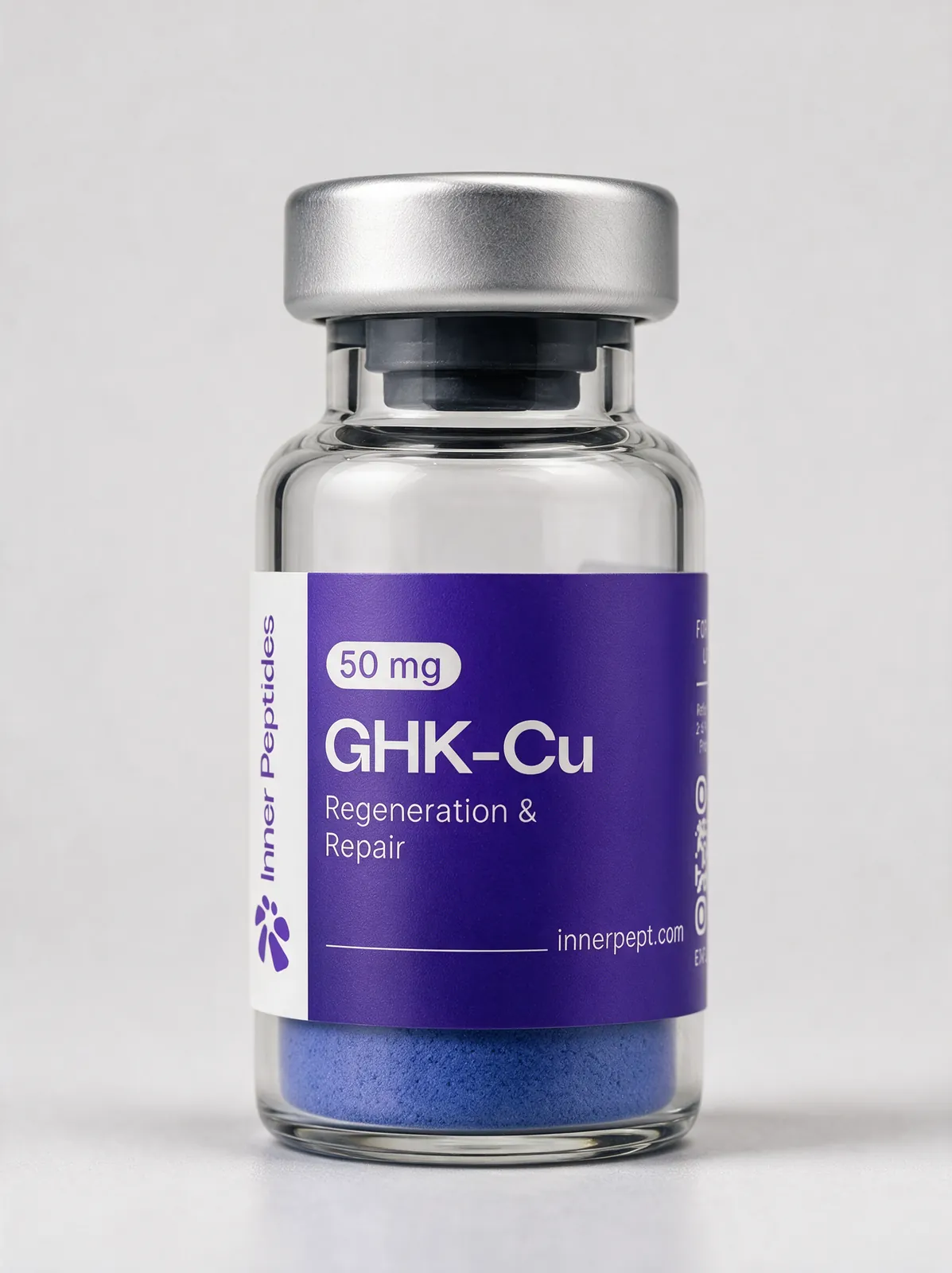
GHK-Cu es un péptido (una proteína muy pequeña) unido a cobre. Tu cuerpo lo tiene de forma natural en la sangre. Se investiga sobre todo por su relación con la piel: con el colágeno y la elastina, que le dan firmeza y elasticidad, y con la forma en que se renueva.
En qué te podría ayudar.
De interés para mujeres de 35 años en adelante que están atentas a la estructura de la piel y al tejido conectivo — firmeza, textura, con qué facilidad se recupera el tejido — y que quieren entender el mecanismo antes de comprometerse con nada. Como la evidencia sistémica es escasa, su lugar está en una conversación con un profesional de la salud licenciado, no en una rutina que cada quien arma por su cuenta.
Las cifras de arriba son la cantidad de péptido liofilizado que contiene el vial — no son una dosis. Tu protocolo, tiempos y duración se definen uno a uno con un profesional de la salud licenciado, a partir de tu historia y tus objetivos.
Los detalles técnicos, por si te interesan.
Todo lo que sigue es opcional: la ciencia detrás de este producto, para quien quiera leerla.
Qué es, en detalle
GHK-Cu es el tripéptido glicil-L-histidil-L-lisina — glicina, histidina, lisina — quelado con cobre(II). Está presente de forma natural en el plasma humano, lo que lo convierte en una señal que el cuerpo ya reconoce y no en algo sintético que llega desde fuera. El cobre queda sujeto por la histidina y por el grupo amino terminal del péptido, una coordinación que le da a la solución su característico color azul. El interés de la investigación se concentra en su relación con la matriz estructural de la piel: colágeno, elastina y la renovación continua del tejido que hay bajo la superficie.
GHK no es algo que se introduzca desde fuera — circula en el plasma humano como parte del vocabulario de reparación del propio cuerpo. Esa es la premisa aquí: no imponerle una instrucción nueva a la piel ni al tejido conectivo, sino reforzar una señal que el cuerpo ya escribe. Retomar una conversación que ya existe, en lugar de empezar otra distinta.
Cómo funciona por dentro
La función del péptido es inseparable del cobre que transporta. Lo que describe la investigación es un complejo quelado que actúa sobre la maquinaria de la matriz extracelular, más que sobre un receptor en particular.
- Coordinación del cobre. El cobre(II) queda sujeto por la histidina y por el grupo amino terminal del péptido, formando un quelato estable — la razón por la que un vial correctamente reconstituido se ve de un azul nítido.
- Síntesis de proteínas de la matriz. En modelos in vitro y tópicos, GHK-Cu se estudia por su influencia sobre la síntesis de colágeno y elastina — las dos proteínas estructurales que le dan al tejido dérmico su firmeza y su capacidad de recuperar la forma.
- Remodelación de la matriz extracelular. La investigación también examina su papel en la remodelación de la matriz extracelular: esa renovación continua en la que la proteína estructural desgastada se retira y se reemplaza, en lugar de simplemente quedar cubierta por una capa nueva.
- Señalización angiogénica. La literatura describe un aumento de bFGF y VEGF — factores de crecimiento implicados en la formación de la microvasculatura que irriga el tejido mientras se repara.
Lo que estudia la investigación
- Se estudia, sobre todo en modelos in vitro y tópicos, por su relación con la síntesis de colágeno y elastina en el tejido dérmico.
- Podría apoyar los procesos de remodelación propios de la matriz extracelular, en lugar de añadir material estructural desde fuera del cuerpo.
- Se explora por su relación con la señalización angiogénica — las vías de bFGF y VEGF implicadas en la reparación de tejidos.
- La investigación describe actividad antioxidante y antiinflamatoria junto al trabajo sobre la matriz, aunque esa investigación es en su mayoría in vitro y tópica, no sistémica.
- Se considera un componente dentro de un protocolo de regeneración dirigido por un profesional, no una respuesta por sí sola a lo que ocurre en la piel o en los tejidos.
En qué punto está la investigación
Preferimos ser precisos antes que complacientes. El cuerpo de trabajo relevante sobre GHK-Cu es investigación in vitro y dermatológica tópica — ahí es donde está realmente la evidencia. El uso sistémico no ha sido validado clínicamente, y ninguna plausibilidad mecanística sustituye eso. Esta página lo trata como preclínico porque lo es.
Ficha técnica
Conservación y manejo
Antes de empezar.
No publicamos vía, dosis ni pauta. La cifra de 50 mg que aparece en esta página es el contenido del vial, no una dosis. La administración y el protocolo se definen con un profesional de la salud licenciado, a partir de tu historia clínica y de tus objetivos.
La misma molécula, en un contexto distinto. La evidencia publicada más sólida sobre GHK-Cu viene de la investigación tópica y dermatológica, donde se ha estudiado sobre la superficie de la piel. El uso sistémico es una pregunta aparte, y no ha sido validado clínicamente. Preferimos que lo escuches de nosotros a que des por hecho que ambos tienen el mismo respaldo.
Ese color viene del cobre. GHK sujeta el cobre(II) a través de su histidina y de su grupo amino terminal, y esa coordinación produce el azul característico que ves en la solución. Es una propiedad del propio complejo quelado, no un colorante ni un aditivo — aquí el péptido y el cobre no se pueden separar.
Eso lo dejamos sin responder, de manera deliberada. El tejido estructural se renueva a su propio ritmo, la respuesta de cada persona varía, y casi todo lo que se sabe de este péptido viene de trabajo de laboratorio y tópico, no de seguir a personas durante meses. Ese juicio le corresponde a quien lee tus análisis, no a nosotros.
Sí. Este no es un compuesto para manejar por cuenta propia. Un profesional de la salud licenciado debería revisar tu historia clínica, considerar lo que ya tengas en tu protocolo y confirmar si GHK-Cu encaja antes de empezar nada. Dado que buena parte de la base de evidencia es tópica y no sistémica, esa conversación importa más aquí, no menos.
Cada fórmula de Inner Peptides se analiza de forma independiente antes de enviarse, con un Certificado de Análisis disponible si lo pides. Conoce más sobre nuestro estándar de análisis.