

GLOW
Tres péptidos en estudio para la piel y su reparación.
Contenido del vial, no una dosis.
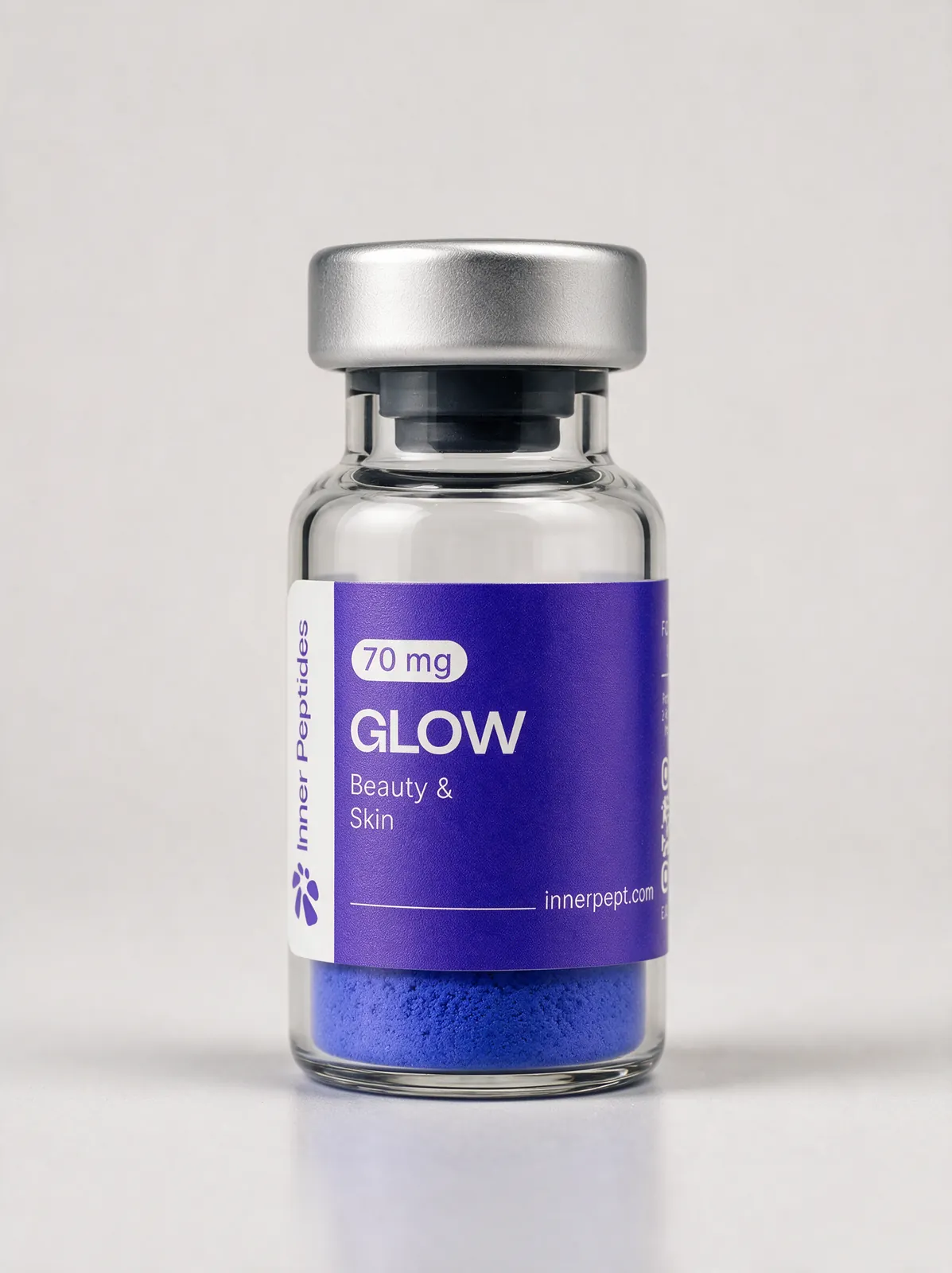
GLOW reúne en un solo frasco tres péptidos: GHK-Cu, BPC-157 y TB-500. Los tres se estudian por su papel en cómo el cuerpo repara la piel y otros tejidos. Cada uno se ha investigado por separado. La mezcla de los tres todavía no se ha estudiado.
En qué te podría ayudar.
GLOW está orientado a mujeres de 35 años en adelante que piensan la estructura de la piel y la reparación de tejidos como una sola cosa: cuando la renovación del colágeno, la recuperación después del esfuerzo y la calidad de la matriz parecen haberse desacelerado al mismo tiempo. Encaja con lectoras que quieren entender qué hace cada componente y que aceptan que aquí la evidencia es temprana.
Las cifras de arriba son la cantidad de péptido liofilizado que contiene el vial — no son una dosis. Tu protocolo, tiempos y duración se definen uno a uno con un profesional de la salud licenciado, a partir de tu historia y tus objetivos.
Qué hay realmente en el vial.
Es una fórmula combinada: cada cifra es la parte de ese componente dentro del vial.
Los detalles técnicos, por si te interesan.
Todo lo que sigue es opcional: la ciencia detrás de este producto, para quien quiera leerla.
Qué es, en detalle
GLOW es una mezcla liofilizada de tres péptidos en un solo vial: GHK-Cu, un tripéptido que se une al cobre y que está presente de forma natural en el plasma humano; BPC-157, una secuencia de quince aminoácidos derivada de una proteína del jugo gástrico humano; y TB-500, un fragmento corto que reproduce la región de unión a actina de la timosina beta-4. Cada componente se ha estudiado por separado por su papel en la señalización de la reparación de tejidos. Al reconstituirlo, el cobre le da a la solución su característico tono azul.
El GHK-Cu no es química tomada prestada de otra parte: circula en el plasma humano, y la timosina beta-4, la proteína de la que proviene TB-500, está dentro de la mayoría de las células humanas. Las instrucciones para construir matriz, abrir el suministro de sangre y llevar las células a su lugar ya están escritas. La premisa de GLOW es que esas tres señales lleguen juntas y no una a la vez. Esa premisa es un razonamiento sobre el mecanismo, no un hallazgo: la combinación en sí no se ha estudiado.
Cómo funciona por dentro
GLOW combina tres péptidos que actúan sobre distintos puntos de una misma secuencia de reparación: la construcción de la matriz, la señalización de los vasos sanguíneos y el movimiento celular. Cada uno tiene su propia diana molecular; ninguno aporta el tejido en sí.
- Activación de la matriz por cobre. El GHK-Cu lleva cobre(II) coordinado por su residuo de histidina y su grupo amino terminal. En modelos de investigación, este tripéptido se relaciona con la síntesis de colágeno y elastina y con la remodelación de la matriz extracelular.
- Señalización angiogénica. BPC-157 se estudia en modelos animales a través de la señalización por óxido nítrico y de las vías VEGFR2–Akt–eNOS y FAK–paxilina, rutas asociadas a la formación de nuevos vasos sanguíneos y a la citoprotección en tejido sometido a estrés.
- Regulación de la actina. TB-500 reproduce la región de unión a actina de la timosina beta-4, la proteína secuestradora de actina presente en la mayoría de las células humanas. La investigación lo vincula con la migración celular a través de Akt/mTOR y del aumento de VEGF y angiopoyetina-1.
- Fundamento de la combinación. Matriz, vasculatura y movimiento celular son requisitos sucesivos de la reparación, y ese es el fundamento para combinarlos. Ese fundamento es mecanicista; la combinación en sí no se ha estudiado.
Lo que estudia la investigación
- Reúne tres péptidos estudiados por separado por su papel en la reparación de tejidos — construcción de matriz, señalización vascular y migración celular — en lugar de aislar una sola vía.
- El GHK-Cu se estudia por su papel en la síntesis de colágeno y elastina y en la remodelación de la matriz extracelular, sobre todo en modelos de laboratorio y tópicos.
- BPC-157 se está estudiando en modelos animales por su señalización citoprotectora y angiogénica, incluidas las rutas del óxido nítrico y VEGFR2–Akt–eNOS implicadas en la formación de vasos sanguíneos.
- TB-500 se explora en investigación animal sobre cicatrización de heridas por la migración celular dependiente de actina y la menor fibrosis, actuando a través de la misma región de unión a actina que su proteína de origen.
- Podría considerarse dentro de un protocolo de regeneración diseñado por un profesional de la salud licenciado, y no por sí solo, ya que el fundamento de la mezcla es mecanicista y no está demostrado.
En qué punto está la investigación
Ningún estudio revisado por pares ha evaluado esta combinación de tres péptidos como formulación. La evidencia está a nivel de cada componente y es en gran medida preclínica: BPC-157 y TB-500 se apoyan en trabajos con animales, y una revisión sistemática de 2025 sobre BPC-157 en medicina deportiva examinó 544 artículos y encontró que casi ninguno era clínico. Los datos más sólidos en humanos del GHK-Cu son tópicos, no sistémicos.
Ficha técnica
Conservación y manejo
Antes de empezar.
No publicamos una vía ni un protocolo para GLOW. La cifra de 70 mg describe lo que hay en el vial, no lo que alguien toma. La reconstitución, la vía y la cantidad se deciden con un profesional de la salud licenciado que haya revisado antes tu historia clínica.
En esta página no va ninguna ventana de tiempo, porque la investigación no sostiene ninguna. La razón honesta es que esta combinación nunca se ha estudiado como combinación, así que no hay un plazo que citar: solo investigación a nivel de mecanismo sobre los péptidos por separado. Preferimos que acuerdes con tu profesional de la salud qué vas a medir realmente antes de empezar.
Sí. GLOW solo debería considerarse con un profesional de la salud licenciado que pueda revisar tu historia clínica, ver qué más estás tomando y decidir si una mezcla de tres péptidos es siquiera un punto de partida razonable. Dado lo temprana que es la evidencia, esa conversación pesa más aquí que en otros productos del catálogo.
Porque es el componente con la base de investigación más profunda: sobre todo in vitro y tópica, pero más profunda que la de los otros dos. GHK-Cu 50 mg, BPC-157 10 mg y TB-500 10 mg es la composición sobre la que está construida esta mezcla. Esas cifras son contenido del vial, no dosis, y la proporción es una decisión de formulación, no una proporción estudiada.
El GHK-Cu por sí solo aborda una parte de la reparación: la matriz. GLOW suma dos péptidos estudiados por los pasos que la rodean, la señalización vascular y la migración celular. Vale la pena decir la contrapartida con franqueza: el GHK-Cu tiene la base de investigación más profunda, incluido el trabajo en dermatología tópica, mientras que el caso de la mezcla es un razonamiento mecanicista, no un estudio.
Cada fórmula de Inner Peptides se analiza de forma independiente antes de enviarse, con un Certificado de Análisis disponible si lo pides. Conoce más sobre nuestro estándar de análisis.