
Sermorelin
La forma más corta de una señal que tu cuerpo ya conoce.
Contenido del vial, no una dosis.
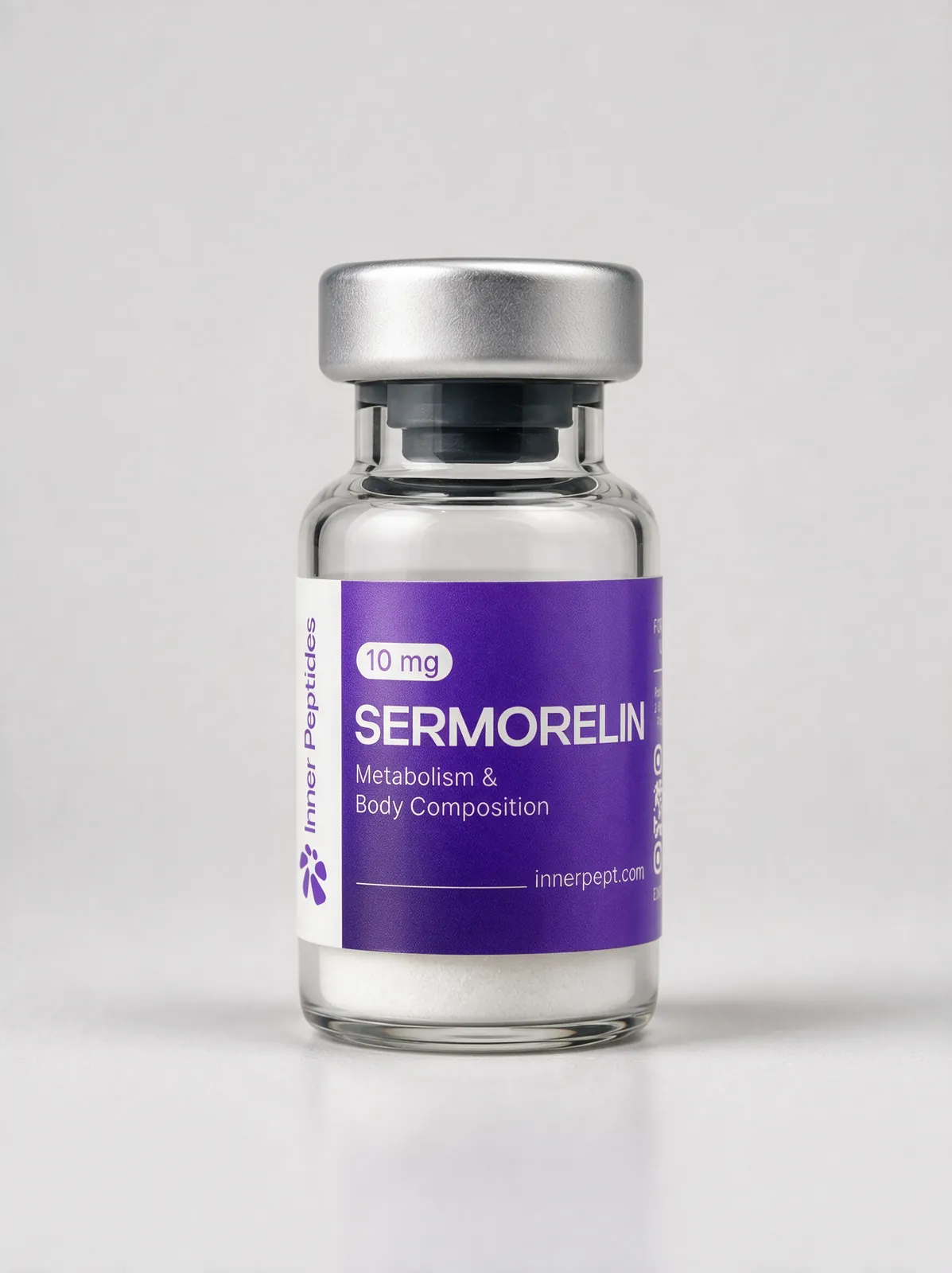
Sermorelin es una versión corta, hecha en laboratorio, de un mensaje que tu cuerpo ya produce. Ese mensaje le pide a una pequeña glándula en la base del cerebro que libere hormona de crecimiento. No es la hormona en sí, sino el aviso que va antes.
En qué te podría ayudar.
Sermorelin es de interés para mujeres de 35 años en adelante que miran la energía, la recuperación y la composición corporal como parte de un mismo panorama hormonal, y que prefieren apoyar la señalización propia de la hipófisis antes que introducir hormona de crecimiento desde afuera. Se ajusta a quienes quieren entender el mecanismo antes de aceptar un protocolo y tienen la intención de mantenerse bajo supervisión durante todo el proceso.
Las cifras de arriba son la cantidad de péptido liofilizado que contiene el vial — no son una dosis. Tu protocolo, tiempos y duración se definen uno a uno con un profesional de la salud licenciado, a partir de tu historia y tus objetivos.
Los detalles técnicos, por si te interesan.
Todo lo que sigue es opcional: la ciencia detrás de este producto, para quien quiera leerla.
Qué es, en detalle
Sermorelin es un péptido sintético de 29 aminoácidos, amidado en su extremo C-terminal, que corresponde al fragmento 1–29 biológicamente activo de la hormona liberadora de hormona de crecimiento humana: la secuencia más corta que todavía conserva la señal completa de GHRH. No es hormona de crecimiento. Es la instrucción que la precede: el mensaje que el hipotálamo le envía a la hipófisis, reproducido en su forma funcional mínima.
La liberación de hormona de crecimiento nunca estuvo pensada para ser constante. El hipotálamo le habla a la hipófisis en pulsos; la hipófisis responde del mismo modo, y la retroalimentación negativa decide cuándo se detiene ese intercambio. Sermorelin no aporta la hormona ni reemplaza esa conversación. Reproduce su primera línea: la forma más corta de un mensaje que el cuerpo ya sabe enviar.
Cómo funciona por dentro
Sermorelin actúa en la parte alta del eje de la hormona de crecimiento, no en su punto final. Lleva la misma instrucción que envía el hipotálamo y llega a la hipófisis a través del receptor que existe para recibirla.
- Unión al receptor de GHRH. Sermorelin se une al receptor de GHRH en los somatotropos de la hipófisis: el mismo sitio que ocupa la propia hormona liberadora de hormona de crecimiento del hipotálamo cuando le da la señal a la glándula.
- Señalización por cAMP. La activación del receptor eleva el cAMP intracelular dentro del somatotropo: el segundo mensajero que lleva la instrucción hacia la síntesis y la liberación de hormona de crecimiento.
- Liberación pulsátil. La hormona de crecimiento se libera siguiendo el patrón pulsátil propio de la hipófisis: en pulsos, sobre el ritmo que la glándula ya tiene, y no como un suministro continuo y plano que llega desde afuera.
- Retroalimentación preservada. Como la señal entra más arriba, en la hipófisis, la retroalimentación negativa del eje se mantiene intacta: el cuerpo conserva su propia capacidad de moderar cuánto se libera.
Lo que estudia la investigación
- Actúa más arriba en el eje, sobre el receptor de GHRH de la hipófisis, en lugar de introducir hormona de crecimiento desde afuera, y deja la liberación misma en manos de la glándula.
- Se estudia por su papel en la estimulación de la liberación de hormona de crecimiento siguiendo el patrón pulsátil propio del cuerpo, y no como un suministro continuo.
- Preserva la retroalimentación negativa que ya viene incorporada en el eje de la hormona de crecimiento, de modo que el cuerpo conserva su propio control sobre cuánto se libera.
- Representa el fragmento más corto de la GHRH humana que conserva toda su funcionalidad: una versión mínima de una señal que el cuerpo ya produce por su cuenta.
- Se considera dentro de un plan dirigido por un profesional que lee el panorama hormonal como un todo, y no como una intervención aislada.
En qué punto está la investigación
Sermorelin tiene una historia clínica real: se desarrolló con un expediente de investigación completo, en su origen como agente diagnóstico para medir la capacidad secretora de hormona de crecimiento de la hipófisis, y se usó en la deficiencia de hormona de crecimiento en población pediátrica. Ahí es donde está su evidencia en humanos. Su uso para la vitalidad a largo plazo no está establecido con ese mismo estándar, y aquí no se presenta como si lo estuviera.
Ficha técnica
Conservación y manejo
Antes de empezar.
No publicamos una vía, una dosis ni un esquema para Sermorelin. La cifra de 10 mg que aparece en esta página es el contenido del vial, no una cantidad para tomar. La administración, la dosificación y la duración del protocolo se confirman de forma individual con un profesional de la salud licenciado que haya visto tu historial y tus análisis.
No le ponemos un plazo a esto. La señalización de la hormona de crecimiento funciona según el ritmo propio del cuerpo, y la respuesta individual varía según la función hipofisaria de base y todo lo demás que forme parte de tu protocolo. Ajustar las expectativas a tu punto de partida es trabajo de consulta, no de una página como esta.
Sí. Sermorelin actúa directamente sobre el eje de la hormona de crecimiento, lo que significa que corresponde a un protocolo supervisado y no a uno que manejes por tu cuenta. Un profesional de la salud licenciado revisa tu historial de salud, considera qué más estás tomando y confirma si es apropiado para ti antes de que empiece nada.
Aportar hormona de crecimiento directamente no involucra a la hipófisis en absoluto. Sermorelin trabaja un paso antes, en el receptor de GHRH de los somatotropos de la hipófisis, de modo que la liberación sigue el patrón pulsátil propio de la glándula y la retroalimentación negativa del eje se mantiene en su lugar. Es un estímulo para la glándula, no un sustituto de ella.
La GHRH humana es una molécula más larga; su región biológicamente activa está en los primeros 29 aminoácidos. Sermorelin es exactamente ese fragmento, amidado en el extremo C-terminal: la secuencia más corta que todavía lleva una señal completa de GHRH. A la molécula no se le agrega nada. Lo que se omite es solo aquello que queda por fuera de la región activa.
Cada fórmula de Inner Peptides se analiza de forma independiente antes de enviarse, con un Certificado de Análisis disponible si lo pides. Conoce más sobre nuestro estándar de análisis.