
Tesamorelin
Actúa sobre la glándula que libera tu hormona de crecimiento.
Contenido del vial, no una dosis.
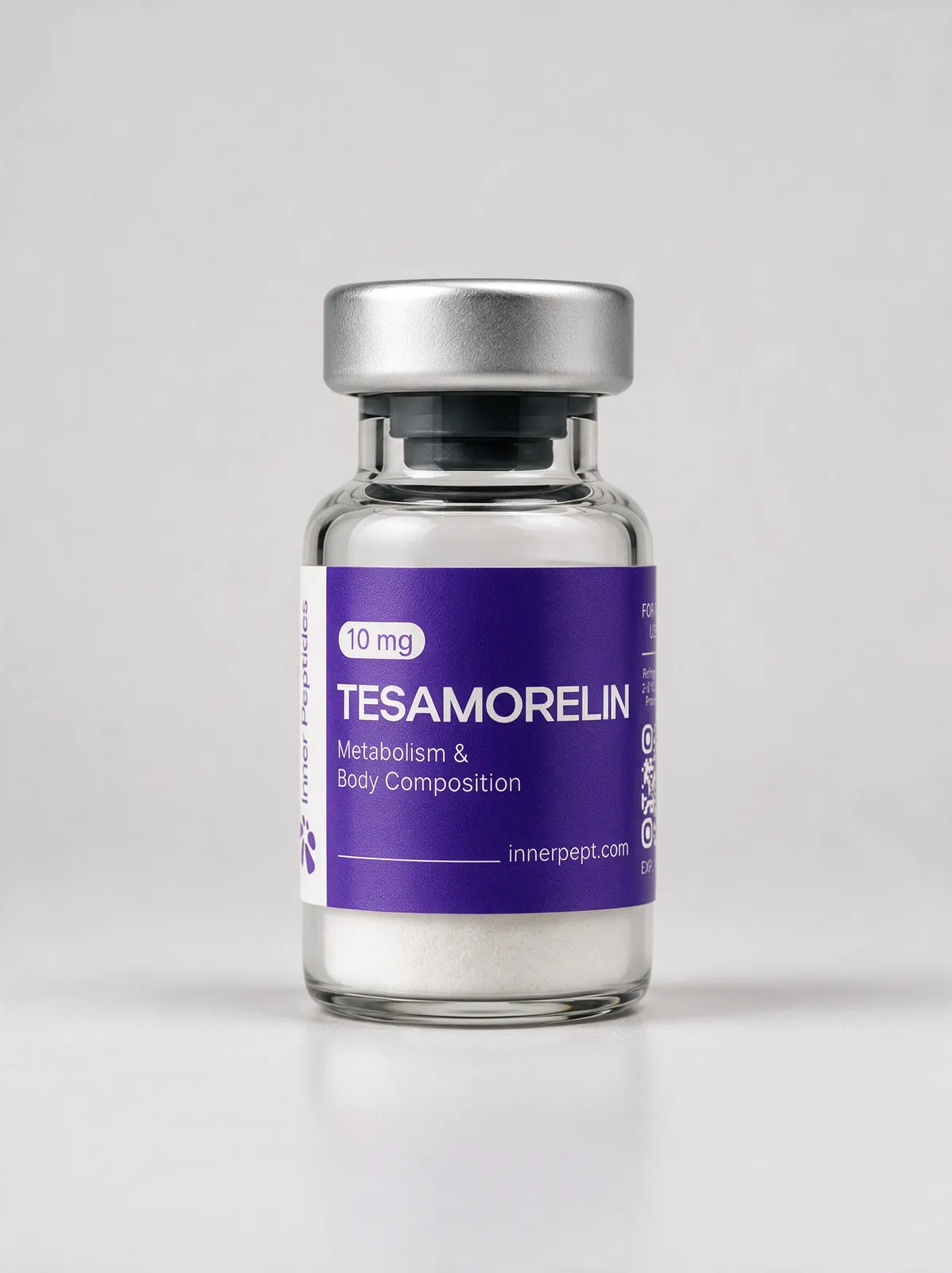
Tesamorelin imita un mensaje que tu cerebro ya le envía a una pequeña glándula para que libere hormona de crecimiento. Es una versión más resistente de ese mensaje, que no se deshace tan rápido. No contiene hormona de crecimiento: le pide a esa glándula que libere la que tu cuerpo ya produce.
En qué te podría ayudar.
Tesamorelin interesa a mujeres de 35 años en adelante que notan cambios en su composición corporal, en particular en la distribución de la grasa abdominal, junto con los cambios hormonales más amplios de esta etapa, y que prefieren apoyar a la glándula que regula la hormona de crecimiento antes que aportar la hormona directamente. Pertenece a un protocolo supervisado, no a un uso por cuenta propia.
Las cifras de arriba son la cantidad de péptido liofilizado que contiene el vial — no son una dosis. Tu protocolo, tiempos y duración se definen uno a uno con un profesional de la salud licenciado, a partir de tu historia y tus objetivos.
Los detalles técnicos, por si te interesan.
Todo lo que sigue es opcional: la ciencia detrás de este producto, para quien quiera leerla.
Qué es, en detalle
Tesamorelin es un análogo sintético estabilizado de la hormona liberadora de hormona de crecimiento humana: la secuencia completa de GHRH, de 44 aminoácidos, con un grupo de ácido trans-3-hexenoico en su extremo N-terminal. Esa única adición estructural es justamente el punto: le permite resistir a la enzima DPP-IV, que de otro modo degradaría con rapidez la hormona natural. Tesamorelin no aporta hormona de crecimiento. Lleva la misma instrucción que el hipotálamo ya envía a la hipófisis, en una forma construida para durar lo suficiente como para entregarla.
La liberación de hormona de crecimiento nunca fue pensada como un suministro constante: el hipotálamo envía GHRH en pulsos y la hipófisis responde de la misma manera. Tesamorelin se une a ese mismo receptor y deja el ritmo intacto. Nada se anula y nada se reemplaza; la instrucción original simplemente llega hasta la glándula que siempre ha sabido cómo responderle.
Cómo funciona por dentro
Tesamorelin actúa un paso antes de la propia hormona de crecimiento, sobre la vía de señalización de GHRH que va del hipotálamo a la hipófisis. Cuatro detalles, estructurales y a nivel del receptor, explican cómo sobrevive esa instrucción y dónde llega.
- Resistencia a DPP-IV. La modificación con ácido trans-3-hexenoico en el extremo N-terminal protege la cadena de 44 aminoácidos frente a DPP-IV, la enzima que elimina rápidamente la GHRH natural. La señal llega intacta a la hipófisis.
- Unión al receptor de GHRH. Tesamorelin se une al receptor de GHRH en los somatotropos de la hipófisis, el mismo receptor que ocupa la GHRH hipotalámica del propio cuerpo. No se introduce una vía nueva: se activa una que ya existe.
- Liberación de GH endógena. La activación del receptor estimula al somatotropo para que libere la hormona de crecimiento que el propio cuerpo ha producido. No se administra nada externo: la glándula aporta la hormona, estimulada en lugar de pasada por alto.
- Pulsatilidad preservada. Como la liberación se origina en la hipófisis y no en un suministro externo, se conserva el patrón pulsátil natural de secreción de hormona de crecimiento, en lugar de aplanarse en una exposición continua.
Lo que estudia la investigación
- Se estudia por su papel al estimular la liberación de la propia hormona de crecimiento de la hipófisis, en lugar de introducir hormona de crecimiento desde fuera del cuerpo.
- Podría apoyar el ritmo pulsátil natural de secreción de hormona de crecimiento del cuerpo, ya que la señal actúa un paso antes, sobre la glándula, en lugar de reemplazar la hormona misma.
- Ha sido evaluado en investigación clínica controlada de Fase 3 que examinó el tejido adiposo visceral, la grasa abdominal que se acumula alrededor de los órganos, en una población de pacientes específica.
- Se explora por su relevancia para la composición corporal a medida que la producción de hormona de crecimiento cambia con la edad, siempre dentro de un protocolo supervisado y construido de forma individual.
- Está construido sobre la propia secuencia de GHRH del cuerpo, con una única modificación estructural que resiste la degradación enzimática en lugar de cambiar la señal que se envía.
En qué punto está la investigación
Tesamorelin se ha estudiado en un programa clínico de Fase 3 a gran escala, que es más evidencia en humanos de la que tiene la mayoría de los péptidos. Ese trabajo se realizó en una población acotada, adultos con lipodistrofia asociada al VIH, y examinó la grasa visceral en ese contexto. Su relevancia para la composición corporal general en mujeres no se ha establecido con el mismo nivel de evidencia.
Ficha técnica
Conservación y manejo
Antes de empezar.
Tesamorelin se prepara a partir de un vial liofilizado que contiene 10 mg; esa cifra es el contenido del vial, no una dosis. No publicamos un protocolo estándar, porque la forma, la cantidad y la frecuencia dependen de tu historia, tus análisis y de lo que ya forme parte de tu cuidado. Todo eso se confirma con un profesional de la salud licenciado durante la consulta.
No vamos a prometer un plazo. La señalización de la hormona de crecimiento es un ritmo, no un interruptor, y la respuesta depende de tu producción de base, tu edad y del resto del protocolo construido para ti. Tu profesional de la salud puede señalar los marcadores que importan en tu caso y decidir cuándo volver a mirarlos.
Sí. Tesamorelin actúa directamente sobre el eje de la hormona de crecimiento, a nivel de la hipófisis, por lo que solo debería introducirlo un profesional de la salud licenciado que pueda revisar tu historia clínica, los medicamentos que tomas y tu panorama hormonal, y luego decidir si tiene lugar o no dentro de tu protocolo.
La hormona de crecimiento administrada de forma directa pasa por alto la hipófisis y llega como un suministro externo continuo. Tesamorelin trabaja un paso antes: se une al receptor de GHRH en la hipófisis, y la glándula libera su propia hormona de crecimiento con su propio patrón pulsátil. El ritmo sigue siendo del cuerpo, y esa es la distinción que importa aquí.
Cubre una población específica. El trabajo de Fase 3 se llevó a cabo en adultos con lipodistrofia asociada al VIH y observó la grasa visceral en ese contexto. Es investigación en humanos real y controlada, y también es más acotada que la forma en que suele hablarse de este compuesto. Preferimos que conozcas esa diferencia antes de considerarlo.
Cada fórmula de Inner Peptides se analiza de forma independiente antes de enviarse, con un Certificado de Análisis disponible si lo pides. Conoce más sobre nuestro estándar de análisis.